
 Kontakt
 Kako kupovati
Dostava
Savjetnik za kupnju
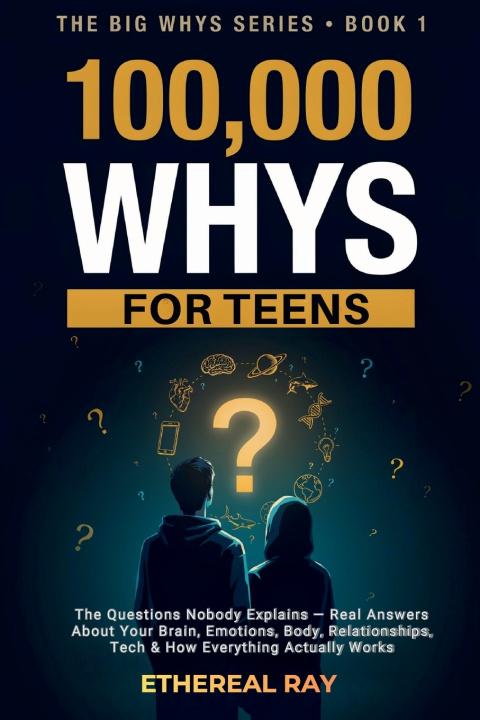
100,000 Whys for Teens
The Questions Nobody Explains - Real Answers About Your Brain, Emotions, Body, Relationships, Tech & How Everything Actually Works
 Engleski
 36 b
36 b
 Novo
Novo
Do 30 dana za povrat

Why does your brain go completely blank right when you need it most?
Why does rejection feel like actual physical pain? Why is it impossible to stop scrolling, even when you know you should?
These aren't small questions. They're the ones that actually keep teens up at night, and almost nobody explains them properly.
100,000 Whys for Teens answers 198 of them with real science and zero textbook tone. Your guide is J, 18, a former track athlete recovering from a torn ACL and still figuring things out. Not a therapist, not an expert, just someone who got curious about why his brain and body kept doing weird things and couldn't stop reading once he started. Every answer follows the same format: THE SHORT ANSWER for the TL;DR, THE REAL ANSWER for the full explanation, J SAYS for a personal story connecting the science to real teen life, and BRAIN BOOST for one extra fact worth sharing immediately.
Ten chapters cover 198 real questions:
Your Brain (why do you overthink, why does your brain go blank under pressure),
Your Emotions (why does rejection hurt like physical pain, why do you cry at things that aren't sad),
Your Body (why do you get butterflies, why does your voice crack),
Your Brain on School (why do you forget things right after studying, why does an all-nighter backfire),
People and Relationships (why is peer pressure so hard to resist, why do friendships drift apart),
Technology and Social Media (why is scrolling impossible to stop, why does your phone make you anxious),
Food, Sleep and Energy (why does sugar crash you, why do teens need more sleep than adults),
Animals and Nature (why do sharks never run out of teeth, why do octopuses have three hearts),
Space and Science (why is space silent, why haven't we found aliens yet), and Life's Big Questions (why does life feel meaningless sometimes, why does kindness matter).
This isn't a science encyclopedia written by someone who forgot what being a teenager felt like. Every answer is followed by J's honest, specific, personal take, and the science stays accurate while the voice stays real. If your teen has ever Googled a question at midnight and ended up reading for three hours, this book was written for them.
For librarians, educators, and booksellers: this title sits at the intersection of curiosity-driven science encyclopedias and teen self-help, answering real reference-desk and classroom questions with citable, research-grounded content while remaining genuinely browsable for independent reading time.
The Big Whys Series, Book 1. More coming soon: 100,000 Whys for Teen Boys and 100,000 Whys for Teen Girls. Ask. Wonder. Connect. Discover


Informacije o knjizi
Engleski
