Besplatna dostava putem Box Now paketomata i Overseas kurirske službe iznad 69,99 €.

Pridružite se zajednici ljubitelja knjige iz cijelog svijeta i ostvarite mnoštvo pogodnosti.
Izradite besplatni račun
Besplatna dostava Overseas kurirskom službom iznad 69.99 €
DPD kurir 3.99 €
DPD točka 3.49 €
GLS Kurir 4.99 €
GLS paketomat 3.99 €
Hrvatska pošta 4.99 €
Dostava Overseas 4.99 €
Box Now 4.49 €
 Kontakt
 Kako kupovati
Pomoć
Dostava
DPD kurir 3.99 €
DPD točka 3.49 €
GLS Kurir 4.99 €
GLS paketomat 3.99 €
Hrvatska pošta 4.99 €
Dostava Overseas 4.99 €
Box Now 4.49 €
Besplatna dostava Overseas kurirskom službom iznad 69.99 €
Savjetnik za kupnju
Ovdje smo zbog vas!
+385 21 784 0072
Moj račun
▸
Prazno :-(
0
Besplatna dostava putem Box Now paketomata i Overseas kurirske službe iznad 69,99 €.
A Dark British Christmas
Ghosts, Omens and the Strange History of Britain's Winter Traditions
Jezik
 Engleski
Engleski
Knjiga
Meki uvez
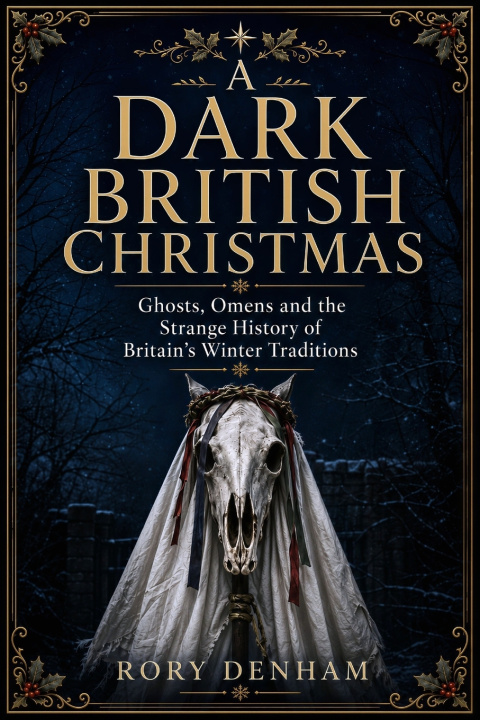
On Christmas morning in the 1640s, a Scottish minister walked through his parish and looked inside e...
Cijeli opis
Libristo kod: 53567883
?
 40 b
40 b
 Pripremamo
 Novo
Novo
40 b
Pripremamo
Novo
16.53
€
Očekivane nove zalihe
Dobivanje novih zaliha 24. 08. 2026
Do 30 dana za povrat

On Christmas morning in the 1640s, a Scottish minister walked through his parish and looked inside every house in it. He was checking that nobody had roasted a goose.
That is British midwinter folklore as its own records describe it. Not snow and spirits - cold, hunger, obligation, and a great deal of enforcement.A household in Shropshire is still blamed, a century later, for an avalanche that killed its neighbours, because it once lent a man a light. A young woman stands in a Nottinghamshire street at one in the morning, locked out of her own home until a male relative can be found to cross the threshold first. In Edinburgh, men fight over who gets to knock.
And the ghosts everyone expects are missing entirely.
Shakespeare, a Victorian antiquary and the informants of a Welsh country parson agree, across three hundred years, that Christmas Eve was one of the safest nights in the British calendar - the night when the cock crowed until dawn and no spirit could walk at all.
So where did the darkness come from?
Twenty chapters, one custom at a time, traced to the earliest record that can actually be found.
The horse's skull that came to the door in Wales and had to win a singing contest to get inside. The log so large it once burned a house down, dragged in behind a horse because the servants drank free for as long as it lasted. The poor who arrived on the shortest day and did not consider themselves beggars. The child made a bishop for twenty-four hours while the real one carried his books. The men whose masks made them briefly unaccountable, and the five who danced with swords in a kirkyard in 1623 and walked away because nobody could see their faces. The luck of a house, treated as a substance that could be carried out in a coal, swept out with the dust, or stolen by a neighbour with a broom. And the century in which keeping Christmas was a criminal offence in England and a matter for the kirk session in Scotland.
Some of it turns out to be older than anyone assumes. Rather more of it is younger. One of the most photographed midwinter ceremonies in Britain was invented by a temperance society in 1870, and within four generations the people performing it believed it was a Norse inheritance - under full documentation, where every step can be watched.
What you get from reading it
A straight answer, at last, to which parts of the British Christmas are genuinely old and which were made up - with the evidence set out so you can judge it yourself rather than take anyone's word for it. Enough to walk into a wassail, a Mari Lwyd procession or a hooden horse night and know exactly what you are looking at, and why the explanation on the poster is probably wrong. A dated calendar of the whole dark season, from St Thomas's Day to Candlemas, that can be read straight through or opened on whatever date you happen to be on. And a lasting immunity to the next atmospheric article claiming that any of it goes back to the druids.
For readers of Ronald Hutton and anyone who has ever wondered what the twelve days of Christmas were actually for.
Glumica
&
Poliglotkinja
EWA KASP
za
Pusti video


Libristo ima najveći izbor literature na stranim jezicima. Zato svoje knjige kupujem ovdje.
Informacije o knjizi
Puni naziv
A Dark British Christmas
Autor
Rory Denham
Jezik
Engleski
Engleski
Uvez
Knjiga - Meki uvez
Datum izdanja
2026
Broj stranica
196
EAN
9798193896418
Libristo kod
53567883
Nakladnici
Independently published
Težina
271
Dimenzije
152 x 229 x 11
