
 Kontakt
 Kako kupovati
Dostava
Savjetnik za kupnju
friend complicates matters
 Engleski
 115 b
115 b
Do 30 dana za povrat
Kupci su kupili i

















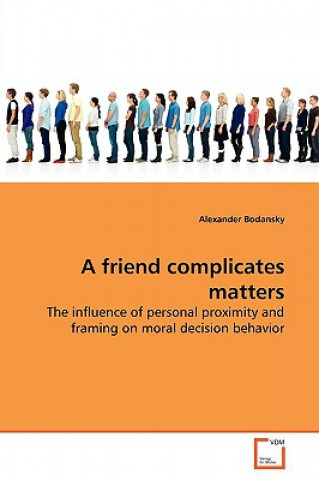
To explain decision behavior by reducing it to §utility maximization, as Kahneman and Tversky (2000) §do, or to intuitive behavior, as Gigerenzer (1996) §does, is to risk oversimplification. There is no §single definition of rational decision behavior. The §context defines what decision behavior can be §evaluated as rational. In the context of morality, §subjects base their decision behavior on four §different ethical positions: deontology, hedonism, §intuitionism and utilitarianism. In this article the §classical Asian disease problem (ADP), used by §Kahneman and Tversky (1981) to show the framing §effect, is understood as a moral dilemma. To reach a §decision, subjects relied to varying degrees on all §four ethical positions. Variation of the ADP`s §personal proximity influenced subjects decision §behavior, leading to the disappearance of the §framing effect, and changing the extent of subjects §reliance on the four ethical positions.


Informacije o knjizi
Engleski
Kategorija

Poklonite ovu knjigu još danas
To je jednostavno
1 Dodajte knjigu u košaricu i odaberite isporuku kao poklon 2 Zauzvrat ćemo vam poslati kupon 3 Knjiga dolazi na adresu poklonoprimcaMoglo bi vas zanimati i











Dobar dan! Ja sam Libroamiko, vaš književni savjetnik.
Kako vam mogu pomoći?