
 Kontakt
 Kako kupovati
Dostava
Savjetnik za kupnju
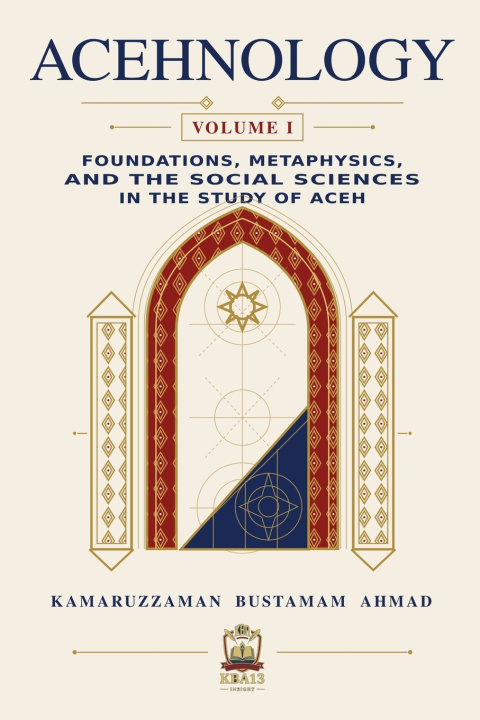
Acehnology
Volume I: Foundations, Metaphysics, and the Social Sciences in the Study of Aceh
 Engleski
 69 b
69 b
 Novo
Novo
Do 30 dana za povrat

What if Aceh were studied not merely as a region, but as a distinct intellectual world?
The Acehnology Series offers a comprehensive interdisciplinary study of Aceh-its history, Islamic intellectual traditions, Sufi metaphysics, society, culture, politics, and encounter with colonial and modern systems of knowledge. Moving beyond conventional regional history, the series approaches Aceh as both a subject of scholarship and a source of concepts capable of contributing to wider discussions in Islamic studies, anthropology, philosophy, sociology, Southeast Asian studies, and postcolonial thought.
Aceh occupies a remarkable place in the history of Indonesia and the wider Malay world. It has been a centre of Islamic scholarship, maritime exchange, political authority, anti-colonial resistance, religious debate, armed conflict, humanitarian tragedy, and post-conflict peacebuilding. Yet Aceh has often been interpreted through categories developed elsewhere: colonial ethnography, Orientalist scholarship, Indonesian national history, conflict studies, and international development. The Acehnology Series reconsiders these inherited frameworks while giving serious attention to Acehnese perspectives, intellectual traditions, historical experiences, and modes of understanding.
Across its volumes, the series examines the relationship between Islam and Acehnese society; the writings and legacies of major Acehnese Muslim thinkers; Sufism and Islamic mysticism; waḥdat al-wujūd; insān kāmil; ʿirfānī epistemology; religious anthropology; social theory; indigenous and local knowledge; colonialism; decolonial scholarship; and the continuing struggle to define Aceh within Indonesia, Southeast Asia, and the global history of Islam.
The series also asks a fundamental question: who has the authority to produce knowledge about Aceh?
For centuries, Aceh was described by travellers, colonial administrators, Orientalists, anthropologists, historians, and political observers. Their works created influential representations of Acehnese religion, customary law, society, warfare, and identity. Acehnology critically examines that intellectual inheritance without dismissing its historical value. It identifies the assumptions behind established interpretations and opens space for approaches grounded in Aceh's own philosophical, religious, social, and cultural foundations.
Volume I, Foundations, Metaphysics, and the Social Sciences in the Study of Aceh, establishes the conceptual foundation of this project. It presents Acehnology as a proposed field of knowledge, maps its principal areas of inquiry, and places Acehnese thought in conversation with Islamic philosophy, Sufi metaphysics, Western philosophy, anthropology, sociology, the Islamisation of knowledge, and postcolonial criticism. The volume discusses figures and traditions ranging from Hamzah Fansuri and the Acehnese wujūdiyyah debates to Hegel, modern social theory, and Christiaan Snouck Hurgronje's role in the colonial construction of Aceh studies.
Written for scholars, lecturers, students, researchers, and intellectually curious readers, the Acehnology Series will be valuable to anyone interested in:
• Aceh history and culture
• Islamic studies and Islamic philosophy
• Sufism and Islamic mysticism
• Indonesian and Southeast Asian studies
• Religious anthropology and sociology
• Colonialism and Orientalism
• Postcolonial and decolonial studies
• Indigenous and local knowledge
• The intellectual history of the Malay world
• Religion, identity, conflict, and society
Each volume can be read independently. Together, the books form an expanding intellectual map of Aceh: not simply as a geographical territory or an episode in Indonesian history, but as a living society, a major Islamic intellectual tradition, and a serious field of knowledge.


Informacije o knjizi
Engleski
