
 Kontakt
 Kako kupovati
Dostava
Savjetnik za kupnju
 Engleski
 297 b
297 b
Do 30 dana za povrat
Kupci su kupili i




 /
/
 Meki uvez
 17.34
€
17.34
€
 /
Tvrdi uvez
118.83
€
/
Tvrdi uvez
118.83
€



 /
Tvrdi uvez
34.39
€
/
Tvrdi uvez
34.39
€


 /
Meki uvez
79.79
€
/
Meki uvez
79.79
€






 /
Meki uvez
8.06
€
/
Meki uvez
8.06
€
 /
Meki uvez
9.78
€
/
Meki uvez
9.78
€



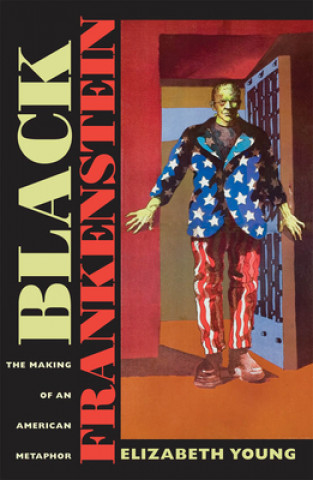
For all the scholarship devoted to Mary Shelley's English novel Frankenstein, there has been surprisingly little attention paid to its role in American culture, and virtually none to its racial resonances in the United States. In Black Frankenstein, Elizabeth Young identifies and interprets the figure of a black American Frankenstein monster as it appears with surprising frequency throughout nineteenth- and twentieth-century U.S. culture, in fiction, film, essays, oratory, painting, and other media, and in works by both whites and African Americans. Black Frankenstein stories, Young argues, effect four kinds of racial critique: they humanize the slave; they explain, if not justify, black violence; they condemn the slave-owner; and they expose the instability of white power. The black Frankenstein's monster has served as a powerful metaphor for reinforcing racial hierarchy - and as an even more powerful metaphor for shaping anti-racist critique. Illuminating the power of parody and re-appropriation, Black Frankenstein tells the story of a metaphor that continues to matter to literature, culture, aesthetics, and politics.


Informacije o knjizi
Engleski

Poklonite ovu knjigu još danas
To je jednostavno
1 Dodajte knjigu u košaricu i odaberite isporuku kao poklon 2 Zauzvrat ćemo vam poslati kupon 3 Knjiga dolazi na adresu poklonoprimcaMoglo bi vas zanimati i

 /
Meki uvez
27.43
€
/
Meki uvez
27.43
€










 /
/
 Adobe ePub DRM
4.33
€
Adobe ePub DRM
4.33
€

 /
Tvrdi uvez
28.74
€
/
Tvrdi uvez
28.74
€








Dobar dan! Ja sam Libroamiko, vaš književni savjetnik.
Kako vam mogu pomoći?