
 Kontakt
 Kako kupovati
Dostava
Savjetnik za kupnju
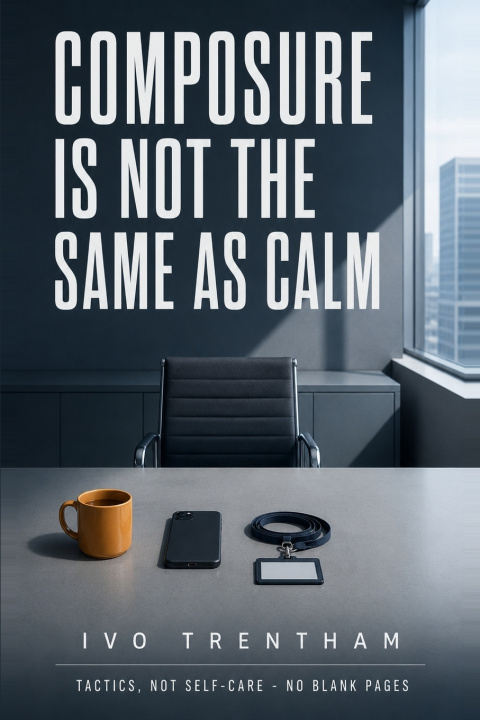
COMPOSURE IS NOT THE SAME AS CALM
 Engleski
 131 b
131 b
 Pripremamo
 Novo
Novo
Do 30 dana za povrat

You are sitting in the car park at eight fifty-five. Something in your life has come apart. And in five minutes you have to walk in and be reliable.
This is a book about how to do that.
Composure is a performance you can put on. Calm is a state you are in. Almost every book available to you confuses the two, which means you end up failing twice - once at the thing that is actually happening, and once at not being serene about it. You are not going to be calm this year. You can be composed, and that is a skill, and it can be done deliberately.
COMPOSURE IS NOT THE SAME AS CALM is written for the person holding something enormous and still turning up: a death, a diagnosis, a marriage ending, a parent whose mind is going, a child in trouble, money coming apart, somebody in the house drinking, a court case, a thing you cannot tell anyone.
Twenty-five short chapters, each about one specific situation:
- The eleven minutes before you walk in, and the three things to do with them
- What composure actually costs you, hour by hour, and the three ways to reduce the bill
- Your three-minute rooms - find them this week, not on the day you need them
- What to tell your manager: the ninety-second script, and the specific adjustments to ask for
- What to tell everybody else - the three versions, and who gets which
- Meetings, email, and working with a brain that will not hold anything
- The call from the hospital that comes in the middle of a meeting
- If you cannot step outside: the twenty-second version for wards, classrooms, counters and cabs
- Nine o'clock in the evening, when there is nothing left and nobody is watching
- The five signals that mean carrying on is the wrong answer
- What nobody tells you about the six months after it ends
No self-care. No boundaries. No pouring from empty cups. No studies, no statistics, no "research shows" - deliberately, stated on the first page, and the author is not a clinician, a lawyer or an HR professional and never pretends to be. Where a question is genuinely medical or legal, the book says so and tells you who to ask instead.
Just tactics, tested on Tuesdays. And no blank pages: every page has text on it.
There is a page at the back on when to stop reading books and ring somebody.


Informacije o knjizi
Engleski
