
 Kontakt
 Kako kupovati
Dostava
Savjetnik za kupnju
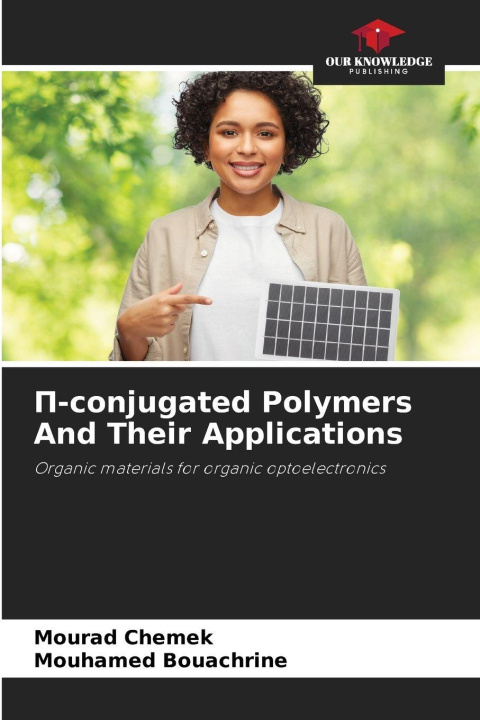
¿-conjugated Polymers And Their Applications
 Engleski
 95 b
95 b
Do 30 dana za povrat
Kupci su kupili i








 /
/
 Tvrdi uvez
 62.52
€
62.52
€








 /
Meki uvez
13.63
€
/
Meki uvez
13.63
€



It's clear that the last two decades of the twentieth century have seen a highly promotional development in the search for new materials in the hope of replacing inorganic semiconductors. Organic polymers, for example, appear to be good candidates, thanks to their low drop, light weight and flexibility, coupled with interesting optoelectronic and scalable properties. However, electronic components based on these new materials are at least as good as optoelectronic components based on inorganic materials. To improve OLED performance, Poly (N-vinylcarbazole) (PVK) was used in multilayer structures where the active layer is a conjugated polymer. The use of PVK has improved electroluminescence quantum efficiency and enhanced the emitted signal. Active layers formed by mixing PVK with a luminescent conjugated polymer have also been developed. The use of PVK in these blend materials has resulted in higher-performance OLEDs with incomparably higher quantum yields than OLEDs based on the conjugated polymer alone.


Informacije o knjizi
Engleski
Kategorija

Poklonite ovu knjigu još danas
To je jednostavno
1 Dodajte knjigu u košaricu i odaberite isporuku kao poklon 2 Zauzvrat ćemo vam poslati kupon 3 Knjiga dolazi na adresu poklonoprimcaMoglo bi vas zanimati i



 /
Meki uvez
10.29
€
/
Meki uvez
10.29
€


 /
Meki uvez
18.37
€
/
Meki uvez
18.37
€




 /
Meki uvez
19.28
€
/
Meki uvez
19.28
€












Dobar dan! Ja sam Libroamiko, vaš književni savjetnik.
Kako vam mogu pomoći?