
 Kontakt
 Kako kupovati
Dostava
Savjetnik za kupnju
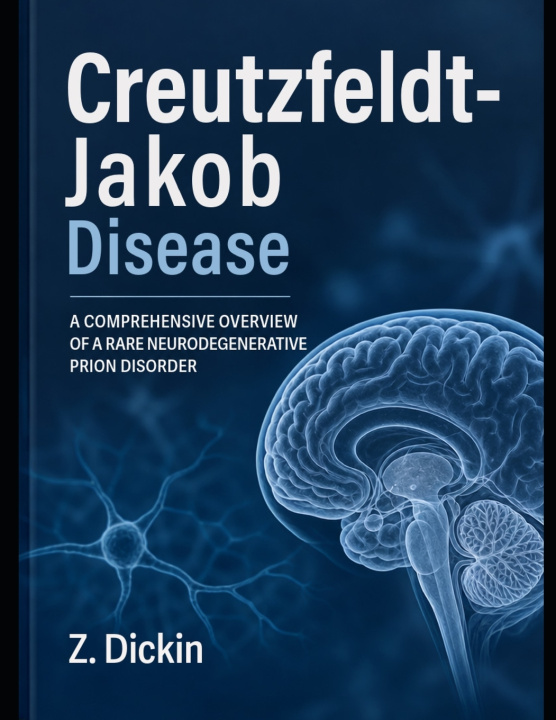
Creutzfeldt-Jakob Disease
 Engleski
 58 b
58 b
 Novo
Novo
Do 30 dana za povrat

Creutzfeldt-Jakob disease (CJD) is one of the rarest and most challenging disorders encountered in modern neurology. It belongs to a group of diseases known as prion diseases, which are characterized by abnormal changes in a naturally occurring protein and progressive damage to the nervous system. CJD is particularly remarkable because of its rapid progression, complex molecular biology, devastating neurological manifestations, and lack of an established curative treatment.
This book, Creutzfeldt-Jakob Disease, has been prepared to provide a comprehensive and accessible introduction to the disease, bringing together fundamental concepts of prion biology, clinical neurology, pathology, genetics, diagnosis, epidemiology, management, and current research. It is intended to help students, educators, healthcare professionals, researchers, and general readers develop a structured understanding of this fascinating and serious neurological disorder.
The book begins with the biological foundations of prions and the normal cellular prion protein. Understanding these concepts is essential because the central feature of prion disease is the abnormal conformational transformation and accumulation of prion protein. The subsequent chapters examine the different forms of human prion disease, including sporadic, genetic, and acquired forms of CJD.
Considerable attention is given to the clinical manifestations of CJD. Patients may initially develop memory impairment, behavioral changes, visual disturbances, imbalance, coordination problems, or other nonspecific neurological symptoms. As the disease progresses, rapidly worsening cognitive impairment, ataxia, myoclonus, rigidity, movement abnormalities, speech impairment, swallowing difficulties, and severe loss of independence may occur. Recognizing these patterns is important because CJD can resemble several other rapidly progressive neurological disorders.
Another major focus of this book is diagnosis. Modern evaluation of suspected CJD may include neurological examination, magnetic resonance imaging, electroencephalography, cerebrospinal-fluid analysis, molecular testing, and specialized prion-seeding assays such as real-time quaking-induced conversion. Because several potentially treatable disorders can mimic CJD, careful differential diagnosis remains essential.
The book also discusses the genetics of prion disease. Pathogenic variants in the PRNP gene are responsible for inherited forms of prion disease, including genetic CJD, Gerstmann-Sträussler-Scheinker disease, and fatal familial insomnia. Genetic counseling is particularly important in these situations because inherited disease can have implications for biological relatives and future generations.
Another important area covered is the pathology of CJD. Characteristic findings include spongiform change, neuronal loss, gliosis, and abnormal accumulation of disease-associated prion protein. Modern molecular classification has demonstrated that CJD is biologically more diverse than a single clinical entity, with different molecular subtypes producing different clinical and pathological patterns.
Because CJD is ultimately fatal in most affected individuals, supportive and palliative care are central components of treatment. Although no established curative therapy currently exists, appropriate management can address symptoms, swallowing difficulties, mobility problems, communication difficulties, nutritional concerns, respiratory complications, pain, agitation, and caregiver needs. Advance care planning and compassionate end-of-life care are also important.
The book further examines public-health aspects of prion disease. Most CJD cases are sporadic and are not transmitted through ordinary social contact.


Informacije o knjizi
Engleski

Poklonite ovu knjigu još danas
To je jednostavno
1 Dodajte knjigu u košaricu i odaberite isporuku kao poklon 2 Zauzvrat ćemo vam poslati kupon 3 Knjiga dolazi na adresu poklonoprimcaDobar dan! Ja sam Libroamiko, vaš književni savjetnik.
Kako vam mogu pomoći?