
 Kontakt
 Kako kupovati
Dostava
Savjetnik za kupnju
 Engleski
 319 b
319 b
Do 30 dana za povrat
Kupci su kupili i







 /
/
 Tvrdi uvez
 74.21
€
74.21
€





 /
Meki uvez
7.27
€
/
Meki uvez
7.27
€






 /
Meki uvez
12.63
€
/
Meki uvez
12.63
€

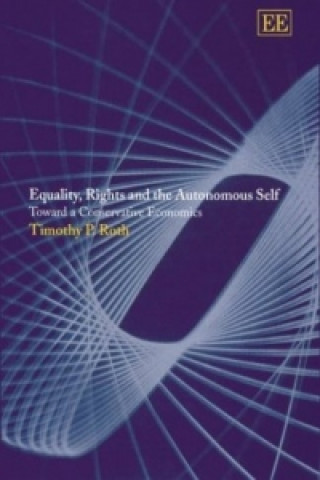
Modern liberalism asserts the transcendental, autonomous self's 'natural rights' against others' moralistic and political preferences, and regards the economist's utilitarian social welfare theory as instrumental to the achievement of 'social justice'. Timothy Roth argues that the liberal enterprise ignores Kant's 'two points of view', confuses Kantian autonomy with moral and political license, mistakes utilitarian impersonality for impartiality, and takes no account of the indeterminacy of social welfare theory's fundamental theoretical constructs. In contrast, the author shows that Kant's 'two points of view' inform the conservative's constitutive political position and animate the consequence-detached, explicitly normative work of the conservative, constitutional political economist. He shows that, unlike modern liberalism, conservatism is grounded in Kant's 'two points of view', that utilitarian social welfare theory cannot be instrumental to the achievement of social justice, and that constitutional political economy is conservative economics. Economists interested in political economy, methodological issues, social welfare theory, public choice theory, or the moral foundations of economics will find much of interest in this thought-provoking volume. Political scientists interested in the philosophical foundations of modern liberalism and conservatism will also want to add this title to their library.


Informacije o knjizi
Engleski
Kategorija

Poklonite ovu knjigu još danas
To je jednostavno
1 Dodajte knjigu u košaricu i odaberite isporuku kao poklon 2 Zauzvrat ćemo vam poslati kupon 3 Knjiga dolazi na adresu poklonoprimcaMoglo bi vas zanimati i

 /
Meki uvez
19.51
€
/
Meki uvez
19.51
€







 /
Meki uvez
10.51
€
/
Meki uvez
10.51
€
 /
Meki uvez
9.09
€
/
Meki uvez
9.09
€





 /
Meki uvez
21.22
€
/
Meki uvez
21.22
€
 /
Tvrdi uvez
32.55
€
/
Tvrdi uvez
32.55
€



 /
Tvrdi uvez
50.55
€
/
Tvrdi uvez
50.55
€



Dobar dan! Ja sam Libroamiko, vaš književni savjetnik.
Kako vam mogu pomoći?