
 Kontakt
 Kako kupovati
Dostava
Savjetnik za kupnju
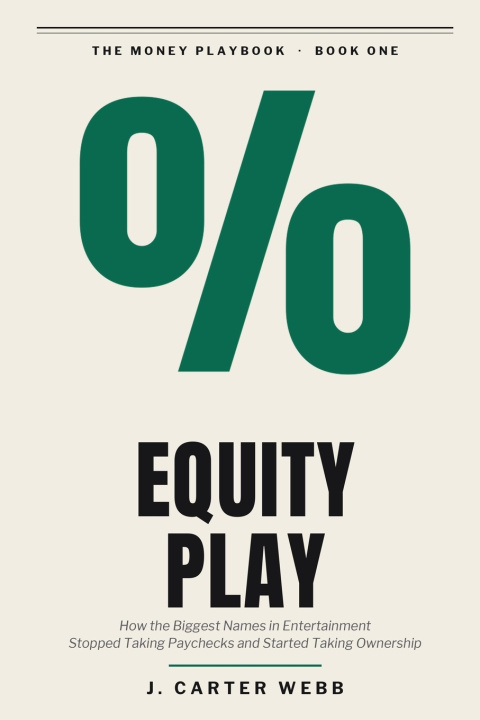
Equity Play
How the Biggest Names in Entertainment Stopped Taking Paychecks and Started Taking Ownership
 Engleski
 40 b
40 b
 Pripremamo
 Novo
Novo
Do 30 dana za povrat

In 1984, a twenty-one-year-old signed for a percentage instead of a paycheck. Four decades later, that percentage pays him more in a single year than his entire playing career did.
The gap between what a career pays and what a percentage pays is the subject of this book.
Equity Play dissects ten transactions in which the talent stopped renting their name and started owning the business. Not biographies. Deal anatomy: who held the leverage, how the structure was built, what it paid over the years that followed, and the principle you can use at your own scale.
Inside: the endorsement royalty that grew into a seven-billion-dollar-a-year business. The headphone company founded, financed, and sold for three billion. The fifty-fifty joint venture that split a beauty empire with a luxury giant. The earnout that paid its sellers twice and kept them working. The equity-for-services swap that turned a five-million-dollar fee into a nine-figure exit. The founding stake that survived a ninety-five percent collapse. The shapewear label whose startup capital was an audience.
Four structures recur: royalty, equity, earnout, and founding ownership. Each prices a different belief. A royalty prices belief in revenue. Equity prices belief in an exit. An earnout prices a disagreement. Founding ownership prices belief in yourself.
Every figure is labeled disclosed, reported, or estimated, with ranges given where credible sources conflict. No invented quotes. No worship. The chapter about a public listing that fell ninety-five percent is here for the same reason the winners are.
Because the trade itself, guaranteed money exchanged for participation, arrives at every scale in less glamorous clothes. Most people take the paycheck without ever asking what the percentage was worth.
The Money Playbook, Book One.


Informacije o knjizi
Engleski
