
 Kontakt
 Kako kupovati
Dostava
Savjetnik za kupnju
 Engleski
 89 b
89 b
 Pripremamo
 Novo
Novo
Do 30 dana za povrat

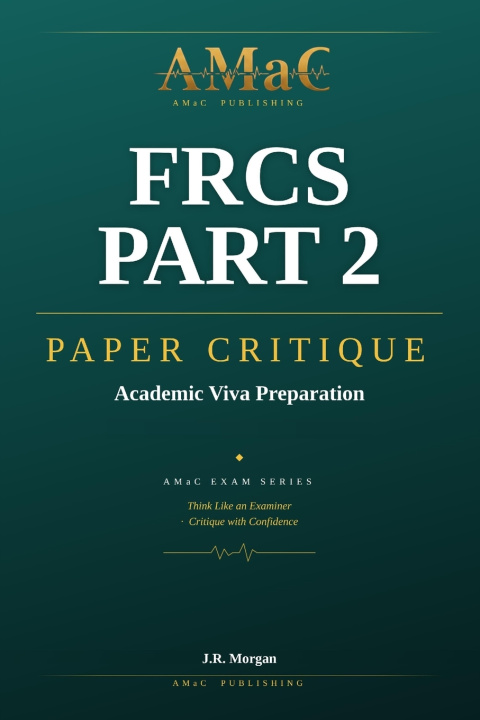
The academic viva gives you thirty minutes with a paper you have never seen, then asks you to defend a judgement about it. Most candidates read it three times and still cannot say what is wrong with it.
This handbook teaches the method.
You get a minute-by-minute plan for the reading period. Four passes, each with one job. The first four minutes are orientation - design, population, headline result, nothing else. The next twelve are interrogation: you go looking for the specific things that break a paper, in the order they appear. Then eight minutes constructing your three strengths and three limitations. The last five rehearsing your opening sentence out loud, so the first thing the examiner hears is fluent.
You get the words. Every chart in the book comes with a viva opener you can say verbatim - sixteen types, from Kaplan-Meier and forest plots to funnel plots, ROC curves, CONSORT and PRISMA, Bland-Altman and calibration curves.
You get the traps. Eleven answers that sound right and lose marks, each with the version that scores. Plus the Glossary of Spin: the phrases authors use to make weak results sound strong, and what to say when you meet one.
And you get four landmark trials appraised in full - CROSS, MAGIC, ACOSOG Z0011, Dutch TME - with the current evidence stream including ESOPEC, Neo-AEGIS and JCOG1109.
Written for FRCS Part 2 candidates in every surgical specialty. The method is specialty-neutral; the worked papers are drawn from general, upper gastrointestinal, colorectal, breast, hepatobiliary and vascular surgery.
Six reference appendices. Full colour throughout. Evidence current to July 2026.


Informacije o knjizi
Engleski
Kategorija
