
 Kontakt
 Kako kupovati
Dostava
Savjetnik za kupnju
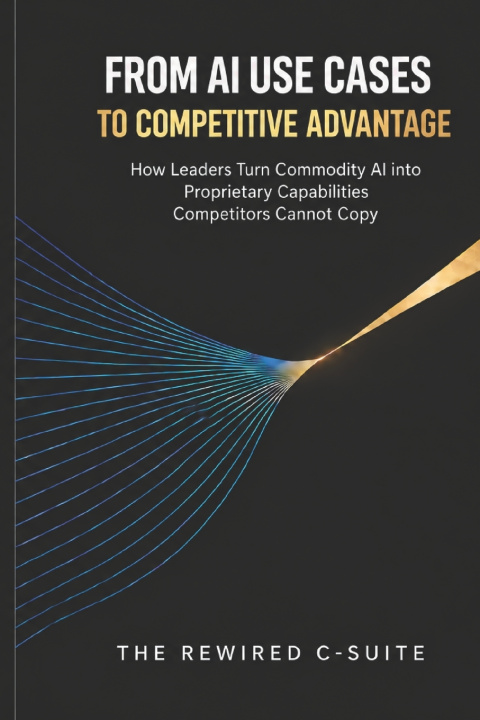
From AI Use Cases to Competitive Advantage
How Leaders Turn Commodity AI into Proprietary Capabilities Competitors Cannot Copy
 Engleski
 39 b
39 b
 Pripremamo
 Novo
Novo
Do 30 dana za povrat

AI is everywhere. Competitive advantage is not.Your competitors can license the same foundation models, deploy the same copilots, and hire the same consultants. So why do some organizations create lasting business value from AI while others accumulate pilots, automate isolated tasks, and remain strategically indistinguishable?The answer is simple: the model is not the capability, the use case is not the strategy, and automation alone is not transformation.From AI Use Cases to Competitive Advantage is an executive playbook for turning widely available AI technology into proprietary organizational capabilities-built from distinctive data, institutional knowledge, redesigned processes, clear decision rights, scalable architecture, and continuous learning.At the center of the book is the CAPABLE Framework, a practical leadership methodology covering:
- Competitive Outcomes: Define where the enterprise has a genuine right to win.
- Advantage Capabilities: Separate foundational tools from capabilities worth building proprietarily.
- Process and Decision Reinvention: Redesign work before automating it.
- AI and Agent Architecture: Build reusable platforms instead of disconnected point solutions.
- Business Data and Knowledge: Convert proprietary information and expertise into enterprise intelligence.
- Leadership and Operating Model: Establish ownership, funding, governance, and multidisciplinary teams.
- Evolution at Scale: Create learning flywheels that improve with every decision and become harder to copy over time.
- CEOs, boards, and investment committees determining where AI can produce defensible value
- CIOs, CTOs, CDOs, and Chief AI Officers building scalable enterprise capabilities
- COOs, strategy leaders, and transformation executives redesigning processes and operating models
- Leadership teams seeking to move beyond fragmented pilots and generic automation


Informacije o knjizi
Engleski

Poklonite ovu knjigu još danas
To je jednostavno
1 Dodajte knjigu u košaricu i odaberite isporuku kao poklon 2 Zauzvrat ćemo vam poslati kupon 3 Knjiga dolazi na adresu poklonoprimcaDobar dan! Ja sam Libroamiko, vaš književni savjetnik.
Kako vam mogu pomoći?