
 Kontakt
 Kako kupovati
Dostava
Savjetnik za kupnju
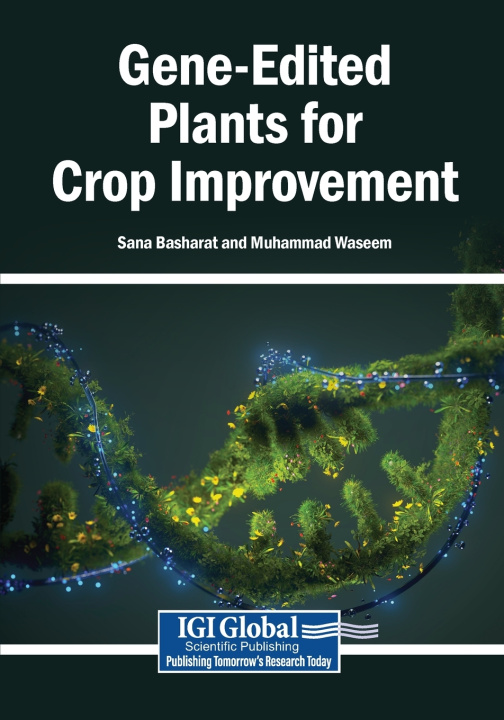
Gene-Edited Plants for Crop Improvement
 Engleski
 488 b
488 b
 Pripremamo
 Novo
Novo
Do 30 dana za povrat

Gene editing technologies have transformed plant science by providing researchers with precise tools to improve crop performance and address some of agriculture's most pressing challenges. Techniques such as CRISPR/Cas9 are enabling the development of crops with enhanced yield, improved nutritional value, greater resistance to pests and diseases, and increased tolerance to environmental stresses. As global food demand continues to rise alongside the impacts of climate change, these innovations are creating new opportunities to strengthen food security while supporting more sustainable agricultural practices. At the same time, the rapid advancement of gene editing has prompted important discussions surrounding regulation, ethics, biosafety, and public acceptance. Understanding both the scientific potential and broader implications of gene editing is essential for shaping the future of sustainable agriculture. Gene-Edited Plants for Crop Improvement examines the latest advances in gene editing technologies and their applications in crop improvement across a wide range of agricultural systems. This book explores emerging methodologies, practical applications, and recent research that demonstrate how gene editing can enhance crop productivity, nutritional quality, disease resistance, and environmental adaptability. Covering topics such as public perception and acceptance of gene-edited crops, abiotic stress tolerance, and enhancing crop yield, this book is a fundamental academic resource for graduate and doctoral students, plant geneticists, molecular biologists, plant breeders, agronomists, crop scientists, agricultural biotechnology professionals, sustainability professionals, policymakers, and more.


Informacije o knjizi
Engleski
