
 Kontakt
 Kako kupovati
Dostava
Savjetnik za kupnju
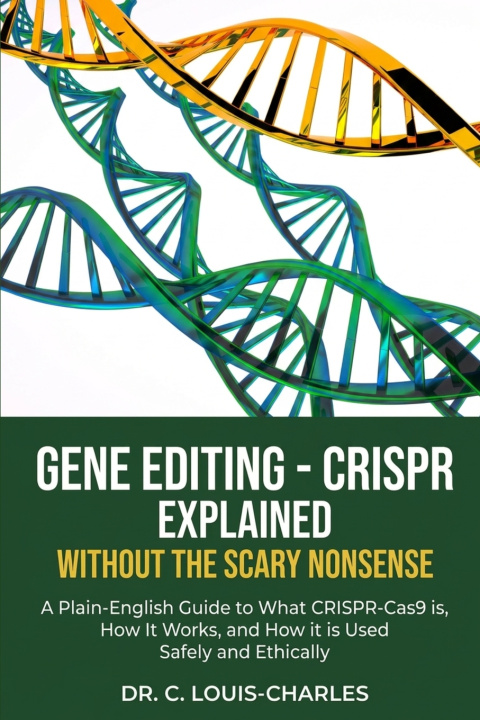
Gene Editing - CRISPR Without the Scary Nonsense
A Plain-English Guide to What CRISPR-Cas9 Is, How It Works, and How It Is Used Safely and Ethically
 Engleski
 69 b
69 b
 Novo
Novo
Do 30 dana za povrat

A clear, humane guide to one of the most consequential technologies of our time-Gene Editing - CRISPR Without the Scary Nonsense explains what CRISPR is, how it works, and what it means for patients, families, clinicians, policymakers, and anyone who reads a headline and wants to understand the reality behind the hype. "This book is what I found. It is written for anyone who has heard CRISPR in a news story and wanted to understand it, not just nod at it." "CRISPR is a tool that allows scientists to find a specific location in the three‑billion‑letter genome and make a precise edit."
Inside this book, readers will learn how to:
- Explain CRISPR in plain English so non‑scientists can follow clinical and policy debates.
- Distinguish somatic vs germline edits and why that difference matters ethically and legally.
- Read a CRISPR headline and ask the five questions that separate signal from noise.
- Understand Cas9, base editors, and prime editors and when each tool is appropriate.
- Follow the path from lab to clinic: ex vivo vs in vivo delivery, trials, and FDA approval.
- Assess safety and off‑target risk and the strategies researchers use to reduce them.
- Compare medical and agricultural uses of gene editing, from sickle cell cures to non‑browning mushrooms.
- Weigh the ethics, access, and cost issues that shape who benefits from gene editing.
This book is organized as a human‑centered journey: it begins with the biology you need to know (DNA, genes, proteins), then tells the origin story of CRISPR in bacteria, explains the molecular mechanics of guide RNAs and Cas proteins, and walks you through real clinical examples-most notably the first approved CRISPR therapies for blood disorders and the treatment pathway that turned a genetic "typo" into a treatable target. Along the way you'll meet a fictional patient whose experience anchors the science in everyday life, and you'll see how the same platform that edits a stem cell can also be used to edit a crop or a pig organ.
The book balances technical clarity with practical context: it explains why a single nucleotide change can cause disease, why many conventional drugs can only treat symptoms, and how gene editing can act at the source. It lays out the three basic editing outcomes-knockout, disruption, replacement-and why each matters-from disabling a repressor to reactivating fetal hemoglobin to inserting a corrected gene. You'll learn how base editing acts like correction fluid for DNA and how prime editing functions as a search‑and‑replace for short sequences, both offering precision without double‑strand breaks.
Readers who care about policy and equity will find thorough, accessible chapters on regulatory differences, patent disputes, pricing, and access-including why a one‑time curative therapy can cost millions and what that means for patients and public payers. The ethics chapter confronts the hard questions: germline editing, designer‑baby scenarios, disability perspectives, and the international governance gaps exposed by past misconduct. Practical checklists teach you how to evaluate news stories, clinical claims, and trial results so you can separate marketing from meaningful progress.
Read this book to: understand the science without jargon, evaluate the real risks and benefits, and join the conversation about who should decide how gene editing is used and who gets access to its cures. If you want to stop nodding at headlines and start asking the right questions-about Cas9, base editors, prime editors, somatic vs germline edits, clinical trials, or the social justice implications of curative medicine-this is the guide that makes those conversations possible.


Informacije o knjizi
Engleski

Poklonite ovu knjigu još danas
To je jednostavno
1 Dodajte knjigu u košaricu i odaberite isporuku kao poklon 2 Zauzvrat ćemo vam poslati kupon 3 Knjiga dolazi na adresu poklonoprimcaDobar dan! Ja sam Libroamiko, vaš književni savjetnik.
Kako vam mogu pomoći?