Kontakt
 Kako kupovati
Dostava
Savjetnik za kupnju
Hanging Tree
 Engleski
 244 b
244 b
30 dana za povrat kupljenih proizvoda
Kupci su kupili i









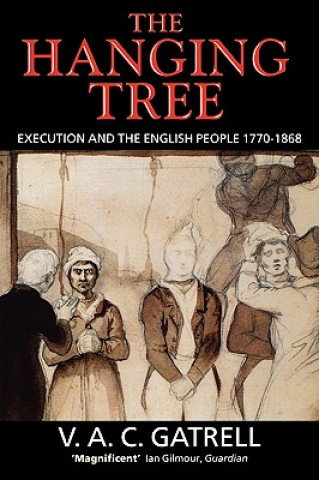
Hanging people for small crimes as well as grave, the Bloody Penal Code was at its most active between 1770 and 1830. In those years some 7,000 men and women were executed on public scaffolds, watched by thousands. Hanging was confined to murderers thereafter, but these were still killed in public until 1868. Clearly the gallows loomed over much of social life in this period. But how did those who watched, read about, or ordered these strangulations feel about the terror and suffering inflicted in the law's name? What kind of justice was delivered, and how did it change? This book is the first to explore what a wide range of people felt about these ceremonies (rather than what a few famous men thought and wrote about them). A history of mentalities, emotions, and attitudes rather than of policies and ideas, it analyses responses to the scaffold at all social levels: among the crowds which gathered to watch executions; among 'polite' commentators from Boswell and Byron on to Fry, Thackeray, and Dickens; and among the judges, home secretary, and monarch who decided who should hang and who should be reprieved. Drawing on letters, diaries, ballads, broadsides, and images, as well as on poignant appeals for mercy which historians until now have barely explored, the book surveys changing attitudes to death and suffering, 'sensibility' and 'sympathy', and demonstrates that the long retreat from public hanging owed less to the growth of a humane sensibility than it did to the development of new methods of punishment and law enforcement, and to polite classes' deepening squeamishness and fear of the scaffold crowd. This gripping study is essential reading for anyone interested in the processes which have 'civilized' our social life. Challenging many conventional understandings of the period, V. A. C. Gatrell sets new agendas for all students of eighteenth- and nineteenth-century culture and society, while reflecting uncompromisingly on the origins and limits of our modern attitudes to other people's misfortunes. Panoramic in range, scholarly in method, and compelling in argument, this is one of those rare histories which both shift our sense of the past and speak powerfully to the present.


Informacije o knjizi
Engleski

Poklonite ovu knjigu još danas
To je jednostavno
1 Dodajte knjigu u košaricu i odaberite isporuku kao poklon 2 Zauzvrat ćemo vam poslati kupon 3 Knjiga dolazi na adresu poklonoprimcaMoglo bi vas zanimati i



 /
/
 Tvrdi uvez
 32.53
€
32.53
€


 /
Meki uvez
13.83
€
/
Meki uvez
13.83
€



 /
Meki uvez
17.07
€
/
Meki uvez
17.07
€
 /
Meki uvez
87.40
€
/
Meki uvez
87.40
€