
 Kontakt
 Kako kupovati

Dostava
Savjetnik za kupnju
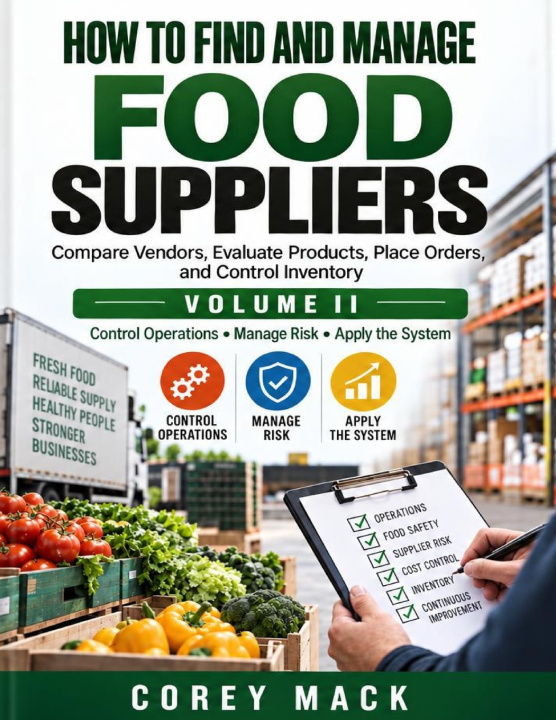
HOW TO MANAGE FOOD SUPPLIERS
Compare Vendors, Evaluate Products, Place Orders, and Control Inventory VOLUME II Control Operations • Manage Risk • Apply the System
 Engleski
 104 b
 Novo
Do 30 dana za povrat

Keep food purchasing under control-from demand planning to delivery, inventory, and payment.
Reliable supplier relationships depend on consistent daily follow-through. Orders need confirmation. Deliveries need inspection. Inventory records need reconciliation. Shortages, credits, and payment differences need documented resolution.
How to Manage Food Suppliers, Volume II: Control Operations • Manage Risk • Apply the System explains how to organize that work into practical procedures your team can follow.
Written by Corey Mack and published by Mack Vision Publishing, this volume is designed for owners, managers, chefs, purchasing staff, and inventory personnel in restaurants, cafés, bakeries, food trucks, catering businesses, and small food-production operations.
Across 18 chapters, it follows the purchasing cycle through everyday operations, supplier performance, disruption planning, and implementation.
Inside, you will learn how to:
Plan replenishment and control orders. Forecast demand, establish reorder rules, prepare purchase orders, and manage supplier confirmations.
Receive and evaluate deliveries. Verify product condition, document discrepancies, and organize holds, rejections, and supplier claims.
Maintain dependable inventory records. Store and rotate stock, conduct physical and cycle counts, and investigate differences between recorded and actual quantities.
Measure waste and usage. Compare actual consumption with expected usage and build records that help identify where losses occur.
Reconcile purchasing and payment records. Match invoices, receipts, credits, and payments while keeping unresolved differences visible.
Select purchasing software and review suppliers. Evaluate operational needs, plan implementation, and use supplier scorecards to support documented performance reviews.
Prepare for operating disruptions. Trace product lots, organize recall-response records, and plan for shortages, delivery interruptions, and supplier failure.
Train staff and check the system. Define responsibilities, teach repeatable procedures, and audit transactions against supporting evidence.
Four detailed business cases put the methods into context: a restaurant's first month of controlled purchasing, a food truck and caterer's event plan, a bakery café's seasonal purchasing cycle, and a small producer's ingredient and packaging requirements.
Worked examples, reusable forms, exercises, and explained answers support hands-on learning. Purchasing logs, receiving records, inventory sheets, waste reconciliations, supplier scorecards, and training tools help readers connect individual tasks to a documented operating process.
The final chapter provides a 30-, 60-, and 90-day implementation plan for introducing the system, reviewing progress, and identifying work that still needs attention.
This is Volume II of a two-volume guide. Volume I establishes purchasing requirements, supplier qualification, product evaluation, cost comparisons, and negotiation. Volume II carries those decisions into daily operations and practical application.


Informacije o knjizi
Engleski

Poklonite ovu knjigu još danas
To je jednostavno
1 Dodajte knjigu u košaricu i odaberite isporuku kao poklon 2 Zauzvrat ćemo vam poslati kupon 3 Knjiga dolazi na adresu poklonoprimcaDobar dan! Ja sam Libroamiko, vaš književni savjetnik.
Kako vam mogu pomoći?