
 Kontakt
 Kako kupovati
Dostava
Savjetnik za kupnju
 Engleski
 45 b
45 b
 Pripremamo
 Novo
Novo
Do 30 dana za povrat

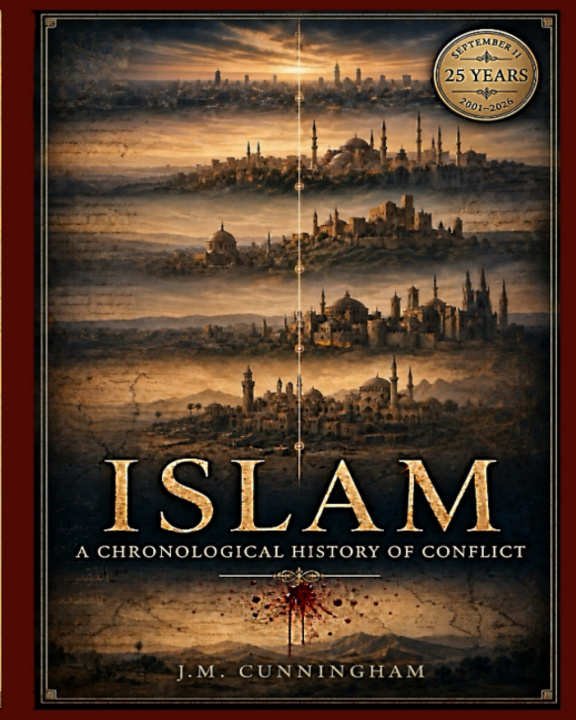
What changes when fourteen centuries of conflict are read as one chronology rather than as a collection of usable memories? The Crusades usually arrive detached from earlier Arab expansion; Ottoman conquest is assigned to imperial history; European colonialism becomes a separate modern rupture; terrorism appears as a crisis of the recent past. Each isolation protects a preferred explanation. J. M. Cunningham's Islam: A Chronological History of Conflict removes that protection by placing the episodes in sequence before allowing any one of them to explain the rest.
The method is clarifying and hazardous. The book does not describe Islam in its religious, devotional, artistic, or social entirety. It examines conflict involving Islamic powers, movements, doctrines, and claims, together with the Christian, imperial, colonial, and national forces that opposed or shaped them. The scale prevents isolated memories from standing alone, but a chronology selected around violence will necessarily accumulate violent evidence. The book must therefore establish continuity without converting selection into destiny.
The book succeeds where chronology disciplines interpretation and where its distinctions survive the pressure of its subject. Its final argument is severe: history must treat the Quran as a humanly transmitted text whose claim to divine authorship remains unproven, while the canon's continuing authority preserves a seed that later actors may activate. The decisive question is not merely whether that conclusion is controversial. It is whether the evidence can sustain it without reducing fourteen centuries to scripture alone, and whether the Quran can face what follows if divine authority is no longer presumed.


Informacije o knjizi
Engleski

Poklonite ovu knjigu još danas
To je jednostavno
1 Dodajte knjigu u košaricu i odaberite isporuku kao poklon 2 Zauzvrat ćemo vam poslati kupon 3 Knjiga dolazi na adresu poklonoprimcaDobar dan! Ja sam Libroamiko, vaš književni savjetnik.
Kako vam mogu pomoći?