
 Kontakt
 Kako kupovati
Dostava
Savjetnik za kupnju
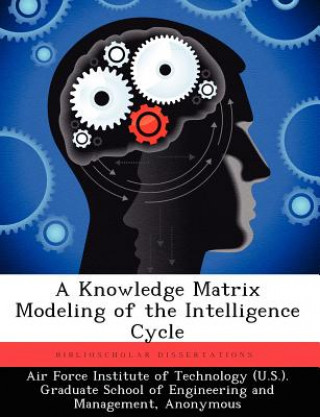
Knowledge Matrix Modeling of the Intelligence Cycle
 Engleski
Kupci su kupili i






 /
/
 Meki uvez
 12.30
€
12.30
€

 /
Tvrdi uvez
25.92
€
/
Tvrdi uvez
25.92
€
 /
Meki uvez
30.26
€
/
Meki uvez
30.26
€







This effort models information flow through the United States Intelligence Community's Intelligence Cycle using a knowledge matrix methodology. The knowledge matrix methodology takes explicit data from multiple sources and fuses that data to measure a current level of knowledge about a target, or situation. Knowledge matrices are used to develop a measure of user-needs satisfaction. User-needs satisfaction compares requested levels of knowledge to a probability of collecting that knowledge within a designated timeframe. This effort expands the work done by Captain Carl Pawling in his March 2004 thesis, Modeling and Simulation of the Military Intelligence Process, by modeling intelligence as an opportunistic, multi-source, multi-entity system of systems. The value of intelligence fusion is compared, and analyzed between three different algorithms; no fusion, a mixed forward and fuse strategy, and strict fusion strategy. These fusion algorithms are then applied to competing intelligence collection architectures in varying intelligence activity scenarios to determine which architectures will most improve the probability of satisfactory collection. Satisfactory collection is measured in terms of quantity, timeliness, and user-need satisfaction of completed intelligence reports.


Informacije o knjizi
Engleski
Kategorija

Poklonite ovu knjigu još danas
To je jednostavno
1 Dodajte knjigu u košaricu i odaberite isporuku kao poklon 2 Zauzvrat ćemo vam poslati kupon 3 Knjiga dolazi na adresu poklonoprimcaMoglo bi vas zanimati i
 /
Meki uvez
18.35
€
/
Meki uvez
18.35
€















 /
Meki uvez
30.67
€
/
Meki uvez
30.67
€



 /
Meki uvez
13.01
€
/
Meki uvez
13.01
€
 /
Meki uvez
12.10
€
/
Meki uvez
12.10
€
 /
Tvrdi uvez
234.40
€
/
Tvrdi uvez
234.40
€
 /
Meki uvez
30.67
€
/
Meki uvez
30.67
€
Dobar dan! Ja sam Libroamiko, vaš književni savjetnik.
Kako vam mogu pomoći?