
 Kontakt
 Kako kupovati
Dostava
Savjetnik za kupnju
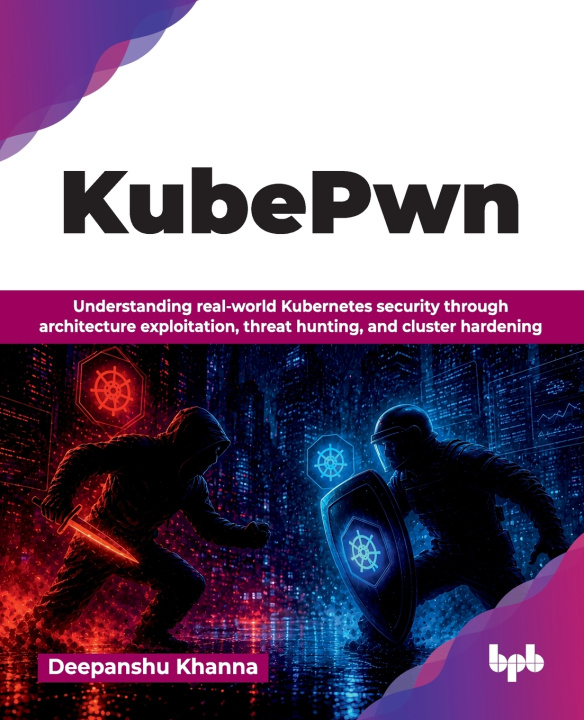
KubePwn
Understanding real-world Kubernetes security through architecture exploitation, threat hunting, and cluster hardening (English Edition)
 Engleski
 89 b
89 b
 Pripremamo
 Novo
Novo
Do 30 dana za povrat

Kubernetes has become the backbone of modern cloud-native applications, but it is also a high-value target for attackers. As organizations rapidly adopt containers, service meshes, and automation, securing Kubernetes clusters has become an active security battle.
This book takes a hands-on, end-to-end approach to Kubernetes security. It begins by exploring real-world attack surfaces, guiding readers through container enumeration, RBAC abuse, and cluster takeover techniques. The focus then shifts to defense, covering Kubernetes audit log analysis, runtime detection, monitoring with Prometheus, and incident response. From an offensive perspective, you will learn to scan exposed services, deliver reverse shell payloads, and enumerate internal cluster metadata. Switching to defensive operations, you will conduct threat hunting using API audit logs, correlate runtime telemetry to reconstruct incident kill chains, and run automated tools. Each chapter is built around practical demonstrations that mirror how attacks and detections occur in real environments.
By the end of this book, readers will gain real-world proficiency in both offensive cluster exploitation and defensive forensic analysis in Kubernetes environments. They will be able to identify and exploit common weaknesses, detect malicious behavior, and design Kubernetes clusters.
WHAT YOU WILL LEARN
● Exploit real Kubernetes misconfigurations used in production attacks.
● Perform container enumeration, breakout, and cluster escalation techniques.
● Detect attacks using audit logs and runtime security tools.
● Hunt threats with Falco, Sysdig, Prometheus, and SIEM.
● Analyze network traffic for lateral movement and data exfiltration.
● Reconstruct Kubernetes attack kill chains and respond effectively.
WHO THIS BOOK IS FOR
This book is for security engineers, DevSecOps practitioners, Kubernetes administrators, red teamers, and SOC analysts securing cloud-native environments. Readers should possess basic Linux administration skills, familiarity with Docker container fundamentals, and a foundational understanding of networking concepts and kubectl command-line usage.


Informacije o knjizi
Engleski
