Kontakt
 Kako kupovati
Dostava
Savjetnik za kupnju
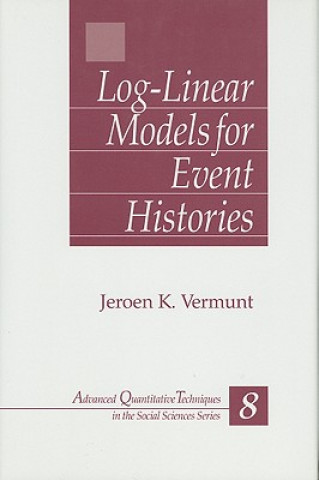
Log-Linear Models for Event Histories
 Engleski
 307 b
307 b
Do 30 dana za povrat
Kupci su kupili i















 /
/
 Digital DVD
 43.57
€
43.57
€








 /
/
 Meki uvez
42.86
€
Meki uvez
42.86
€







Event history analysis has been a useful method in the social sciences for studying the processes of social change. However, a main difficulty in using this technique is to observe all relevant explanatory variables without missing any variables. This book presents a general approach to missing data problems in event history analysis which is based on the similarities between log-linear models, hazard models and event history models. It begins with a discussion of log-rate models, modified path models and methods for obtaining maximum likelihood estimates of the parameters of log-linear models. The author then shows how to incorporate variables with missing information in log-linear models - including latent class models, modified path models with latent variables and log-linear models for non-response.Other topics covered are: the main types of hazard models; censoring; the use of time-varying covariates; models for competing risks; multivariate hazard models; and a general approach for dealing with missing data problems - including measurement error in the dependent variable, measurement error in the covariates, partially missing information in the dependent variable and partially observed covariate values.


Informacije o knjizi
Engleski

Poklonite ovu knjigu još danas
To je jednostavno
1 Dodajte knjigu u košaricu i odaberite isporuku kao poklon 2 Zauzvrat ćemo vam poslati kupon 3 Knjiga dolazi na adresu poklonoprimcaMoglo bi vas zanimati i










 /
Tvrdi uvez
39.31
€
/
Tvrdi uvez
39.31
€

 /
Meki uvez
17.12
€
/
Meki uvez
17.12
€



 /
Tvrdi uvez
124.65
€
/
Tvrdi uvez
124.65
€
 /
Meki uvez
52.28
€
/
Meki uvez
52.28
€

 /
Meki uvez
6.98
€
/
Meki uvez
6.98
€

 /
Tvrdi uvez
92.21
€
/
Tvrdi uvez
92.21
€