
 Kontakt
 Kako kupovati
Dostava
Savjetnik za kupnju
 Engleski
 32 b
32 b
 Novo
Novo
Do 30 dana za povrat

Named four times in his own scripture. Imitated by two billion people.
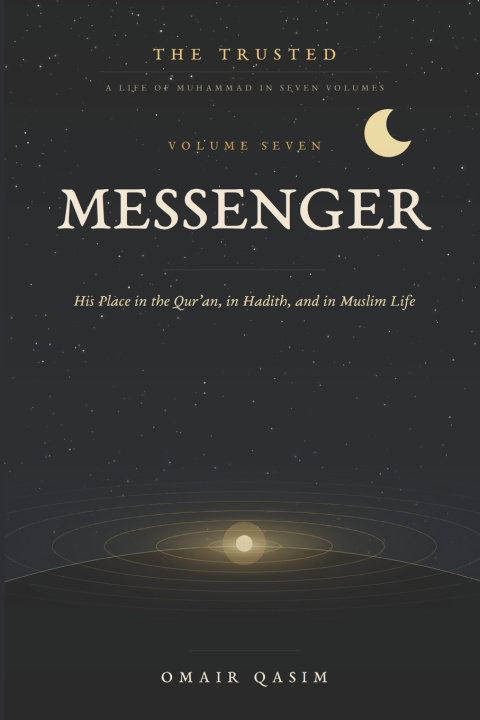
Six volumes have described a man. This one asks why he matters to about a quarter of the people alive.
The answer is not the one most Western accounts assume.
He is not worshipped, and the tradition is emphatic about this to a degree that is difficult to overstate. He is not held to be divine, or the son of God, or an incarnation. The Quran insists, repeatedly and in his own mouth, that he is a mortal like other people, that he does not control benefit or harm, that he does not know the unseen, and that he will die as messengers before him died. In seventy-eight thousand words it names him four times - and one of those is a rebuke.
And yet he is the most imitated human being who has ever lived. Five times a day, across every time zone, people perform a sequence of movements derived by demonstration from what he did in a mud-brick courtyard. Billions of times a day, somebody asks God to bless him.
Holding those two facts together is the subject of this volume.
Three parts
• In the Quran - the four occurrences of his name, the titles, the insistence on his humanity, the passages that criticise him for frowning at a blind man and for wanting ransom money, and the verse that made a biography into a programme of imitation
• In the Hadith - how his practice became the second source of Islamic law; how the reports were collected, graded and canonised; the Shia corpus set out in its own terms; and the modern argument, from Goldziher to the present, about whether any of it can be trusted
• In Muslim life - the blessing invoked on his name, the devotional category of love for him, the argument over celebrating his birthday, and the seven-century dispute about intercession and the limits of veneration
What most outside accounts leave out
Islam is not monolithic on any of this. Whether his birthday may be celebrated, whether he may be asked to intercede, how much of the hadith corpus is reliable, what his practice binds and what it merely commends - every one of these is contested inside the tradition, often bitterly, and has been for centuries. This volume describes the argument rather than the settled position, because there is no settled position.
The seventh and final volume. It does not evaluate the theological claims, and says so. It ends by stating what the evidence shows, what it does not, and why any of it matters.
"And we have not sent you except as a mercy to the worlds."


Informacije o knjizi
Engleski

Poklonite ovu knjigu još danas
To je jednostavno
1 Dodajte knjigu u košaricu i odaberite isporuku kao poklon 2 Zauzvrat ćemo vam poslati kupon 3 Knjiga dolazi na adresu poklonoprimcaDobar dan! Ja sam Libroamiko, vaš književni savjetnik.
Kako vam mogu pomoći?