
 Kontakt
 Kako kupovati
Dostava
Savjetnik za kupnju
 Engleski
 38 b
38 b
 Novo
Novo
Do 30 dana za povrat

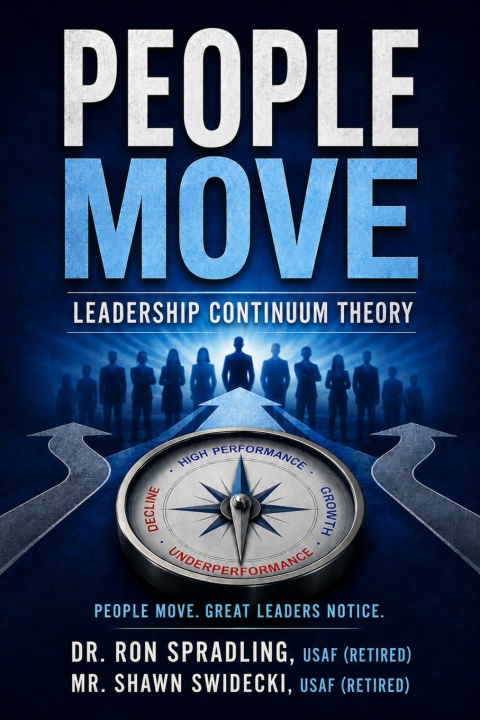
People move. The direction they move can tell you something about the leadership around them.
A high performer begins doing only what is required. A dependable employee starts disengaging. An underperformer suddenly improves. A moderate performer develops into one of your strongest people.
What changed?
People Move: Leadership Continuum Theory presents a practical framework for understanding how leadership practices and organizational conditions can influence employee performance, satisfaction, and engagement over time.
Rather than placing employees into permanent categories, Leadership Continuum Theory recognizes that people move along a performance continuum. High Performers can decline. Moderate Performers can grow. Underperformers can improve. And when several employees begin moving in the same direction, leaders should pay attention to the pattern.
Drawing from more than twenty years of military leadership experience and seven years of building and operating a successful business, Ron Spradling developed Leadership Continuum Theory as a practical way to help leaders recognize that movement and respond to it.
Inside, leaders will learn how to:
- Recognize movement along the Performance Continuum
- Identify early signs of organizational drift
- Develop and retain High Performers
- Help Moderate Performers reach their potential
- Address underperformance through support and accountability
- Apply strategic influence ethically and intentionally
- Measure whether leadership interventions are actually working
- Adjust leadership approaches while maintaining consistent standards
Leadership is not simply about evaluating where people are today. It is about recognizing where they are going, understanding what may be influencing that movement, and knowing when leadership itself needs to adjust.
People move. Great leaders notice.


Informacije o knjizi
Engleski
