
 Kontakt
 Kako kupovati
Dostava
Savjetnik za kupnju
Polo
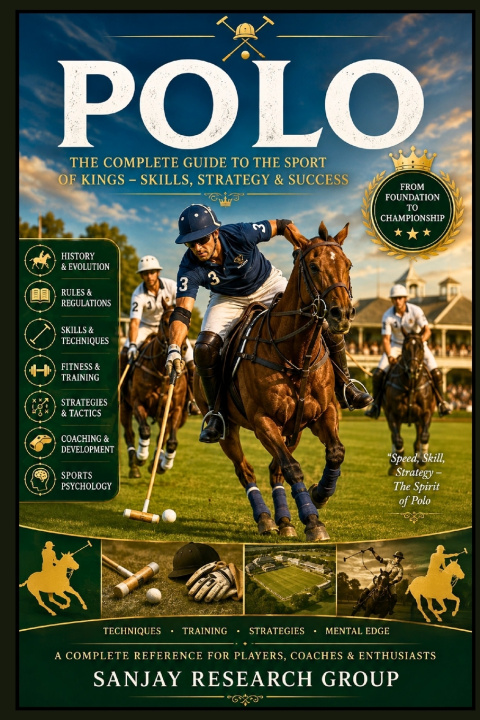
The Complete Guide to the Sport of Kings - Skill, Strategy and Success
 Engleski
 78 b
78 b
 Pripremamo
 Novo
Novo
Do 30 dana za povrat

Polo
Polo is often introduced through its pageantry, speed, and historic association with royalty, yet the game is far more complex than its public image suggests. This book examines polo as a multidisciplinary equestrian team sport in which human judgment and equine athleticism operate as a single competitive system. It traces the game from its ancient martial foundations and movement across Asia to its codification under British influence and subsequent growth throughout the Americas and the modern international sporting world. Alongside this history, the book considers polo's cultural symbolism, economic infrastructure, diplomatic role, and continuing evolution from elite enclaves toward broader collegiate, amateur, arena, women's, and international participation.
The opening chapters establish the language and institutional framework required to understand the sport. Readers are introduced to the meaning and scope of polo, its principal governing organizations, major tournament categories, competition formats, field dimensions, officials, scoring, chukkas, handicaps, fouls, penalties, and standards of conduct. High-goal, medium-goal, low-goal, arena, snow, beach, exhibition, and women's polo are considered within their distinct competitive and commercial contexts. This foundation emphasizes that effective participation depends not only on talent but also on a precise understanding of right-of-way, the line of the ball, safe contact, team responsibilities, and the rules protecting horses and players.
The practical core of the book develops the physical and technical competencies required on the field. It covers riding posture, rein handling, horse control, turning, maneuvering, mallet grip, forehand and backhand strokes, coordination, and awareness at speed. Fitness chapters address strength, power, agility, endurance, mobility, warm-up, recovery, assessment, and injury prevention. Strategic sections then move from individual execution to collective performance, exploring positioning, passing, attacking and defensive formations, field coverage, horse rotation, tempo control, tactical planning, and match management. Advanced material examines precision striking, high-speed control, ride-offs, hooks, neck shots, tail shots, technical drills, and performance enhancement.
Coaches, athletes, students, researchers, club personnel, and serious enthusiasts will also find guidance on practice design, youth development, evaluation, leadership, motivation, and competition preparation. The sports psychology material addresses confidence, concentration, emotional regulation, stress, goal setting, decision-making, and focus under pressure. Throughout, the polo pony remains central: the book recognizes the horse as a sentient athlete whose conditioning, welfare, recovery, and willingness determine the quality and sustainability of play. Readers will gain a coherent intellectual map of polo, a practical vocabulary for training and analysis, and a stronger appreciation of the ethical partnership upon which the sport depends.
By Sanjay Mandavi & Sanjay Research Group


Informacije o knjizi
Engleski

Poklonite ovu knjigu još danas
To je jednostavno
1 Dodajte knjigu u košaricu i odaberite isporuku kao poklon 2 Zauzvrat ćemo vam poslati kupon 3 Knjiga dolazi na adresu poklonoprimcaDobar dan! Ja sam Libroamiko, vaš književni savjetnik.
Kako vam mogu pomoći?