Kontakt
 Kako kupovati
Dostava
Savjetnik za kupnju
 Engleski
 288 b
288 b
Do 30 dana za povrat
Kupci su kupili i


























 /
/
 Note
Note
 8.68
€
8.68
€

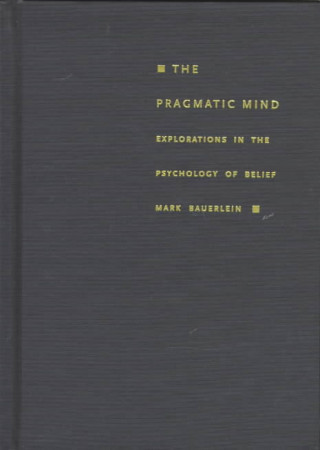
"The Pragmatic Mind" is a study of the pragmatism of Emerson, James, and Peirce and its overlooked relevance for the neopragmatism of thinkers like Richard Rorty, Stanley Cavell, Stanley Fish, and Cornel West. Arguing that the 'original' pragmatists are too often cited casually and imprecisely as mere precursors to this contemporary group of American intellectuals, Mark Bauerlein explores the explicit consequences of the earlier group's work for current debates among and around the new pragmatists. Bauerlein extracts from Emerson, James, and Peirce an intellectual focus that can be used to advance the broad social and academic reforms that the new pragmatists hail. He claims that, in an effort to repudiate the phony universalism of much contemporary theory, the new generation of theorists has ignored the fact that its visions of pragmatic action are grounded in this 'old' school, not just in a way of doing things, but also in a way of thinking about things. Despite its inclination to regard psychological questions as irrelevant, the pragmatic method demands a pragmatic mind - that is, a concept of cognition, judgement, habit, and belief like the one found in the work of the 'old' pragmatists. In offering neopragmatism a theory of the mind taken from Emerson, James, and Peirce, "The Pragmatic Mind" suggests that the neopragmatists' arguments can be sharpened across a variety of disciplines.


Informacije o knjizi
Engleski

Poklonite ovu knjigu još danas
To je jednostavno
1 Dodajte knjigu u košaricu i odaberite isporuku kao poklon 2 Zauzvrat ćemo vam poslati kupon 3 Knjiga dolazi na adresu poklonoprimcaMoglo bi vas zanimati i




 /
/
 Meki uvez
32.03
€
Meki uvez
32.03
€










 /
Meki uvez
15.76
€
/
Meki uvez
15.76
€
 /
Meki uvez
24.05
€
/
Meki uvez
24.05
€