
 Kontakt
 Kako kupovati
Dostava
Savjetnik za kupnju
 Engleski
 87 b
87 b
Do 30 dana za povrat
Kupci su kupili i

















 /
/
 Meki uvez
 36.79
€
36.79
€



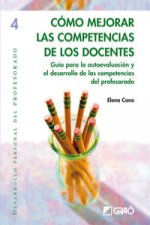








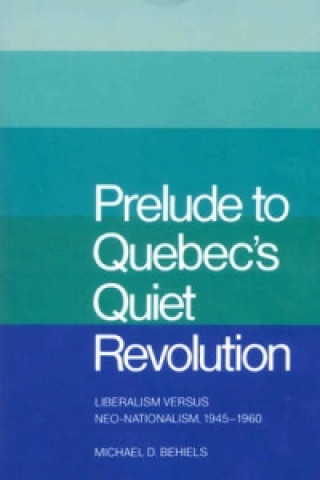
Michael Behiels' study of the intellectual origins of Quebec's Quiet Revolution of the 1960s provides the most comprehensive account to date of the two competing ideological movements that emerged after the Second World War to challenge the tenets of traditional French-Canadian nationalism. The neo-nationalists, a group of young intellectuals and journalists centred around Le Devoir and L'Action nationale in Montreal, set out to reformulate Quebec nationalism in terms of a modern, secular, urban-industrial society that would be fully "master in its own house." An equally dedicated group of French Canadians of liberal and social democratic persuasion was centred around the periodical Cite libre - one of whose editors was Pierre Trudeau - and had links with organized labour. Citelibristes sought to remove what they saw as the major obstacles to the creation of a modern francophone society: the influence of clericalism inherent in the Catholic church's control of education and the social services, and the persistence among Quebec's intelligentsia of an outmoded nationalism that advocated the preservation of a rural and elitist society and neglected the development of the individual and the pursuit of social equality. Behiels delineates the divergent societal models proposed by the two movements, focusing on such themes as the critique of traditional nationalism, the roles of church, state, and labour, the reform of education, and the search for a third party.


Informacije o knjizi
Engleski
Kategorija

Poklonite ovu knjigu još danas
To je jednostavno
1 Dodajte knjigu u košaricu i odaberite isporuku kao poklon 2 Zauzvrat ćemo vam poslati kupon 3 Knjiga dolazi na adresu poklonoprimcaMoglo bi vas zanimati i




 /
Meki uvez
13.77
€
/
Meki uvez
13.77
€






 /
Meki uvez
11.65
€
/
Meki uvez
11.65
€







Dobar dan! Ja sam Libroamiko, vaš književni savjetnik.
Kako vam mogu pomoći?