
 Kontakt
 Kako kupovati
Dostava
Savjetnik za kupnju
 Engleski
 46 b
46 b
 Novo
Novo
Do 30 dana za povrat

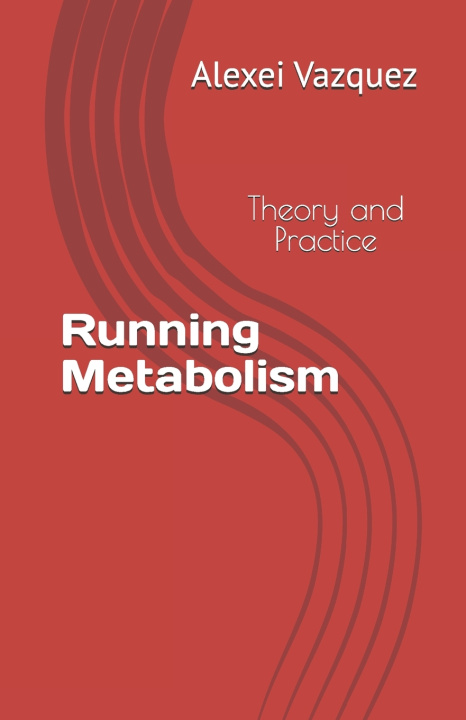
Why can you not run faster, and what would it take? Every runner meets a speed at which running stops being one thing and becomes another: below it you could keep going all day, above it lactate climbs, the breathing goes ragged, and a clock starts that does not stop until you slow down. Sport science has measured that speed for ninety years, calls it the lactate threshold, treats it as the best single predictor of distance performance, and blames a shortage of oxygen. This book argues the shortage is real but is not oxygen: it is room. Mitochondria are objects. They take up space in a muscle fibre that also has to hold the machinery that pulls, and each litre of them turns out ATP at a rate the biochemistry fixes. Multiply that rate by the mitochondria you carry, divide by what a kilometre costs you, and you have a speed. Worked out, a leg packed as full as geometry allows tops out at 13.7 km/h, slower than every world record that finishes inside a day. The way past it is to send lactate out of the legs for the rest of the body to burn, which nearly doubles the engine: the ceiling rises to 26.1 km/h at an oxygen uptake of 90 mL/kg/min. Those are the pace of the 1500 m world record and the highest aerobic capacity ever measured in a human, and the model was shown neither. Above that ceiling nothing is steady, lactate accumulates until a tolerable load is reached, and the speed-duration relation that falls out is the hyperbola coaches have fitted for decades without deriving, now with both of its parameters carrying units and meanings, and holding to three per cent from 5000 m to the marathon. Past the marathon a different limit binds: not lactate but fuel, and the rate at which fat can be burned and a gut can absorb. A chapter on mitochondrial disease tests the claim where it is most exposed, in patients whose mitochondria are broken, and the threshold tracks the measured respiratory capacity of their muscle and nothing else. The second half reads the same equations backwards, because the quantities that set a running speed are the quantities a runner can work on. Only seven of them move at all, and three carry the training: the mitochondria in your legs; the capacity of everything that is not running to dispose of the lactate they export, worth 47.5 per cent against the legs' 52.5, which makes it the other half of the engine rather than a detail, and almost nobody trains it on purpose; and the cost of a kilometre, which divides every speed and every duration in the book, so one per cent of it is one per cent of everything. Each is priced: what a percentage point of mitochondria is worth in marathon minutes, what a thirty per cent gain in clearance is worth, and what a target time demands of each dial if it had to do the job alone. The answers are not comfortable. Mitochondrial training is worth six times more to someone who has done none of it than to someone who has done all of it, which makes the beginner's rapid improvement and the veteran's plateau one equation evaluated at two points rather than a difference of talent or dedication. And the theory forbids as much as it offers: you cannot breathe your way past the switch, cannot swallow your way past it, since caffeine moves the reading on the meter and nothing behind it, cannot ferment your way out with nowhere to put the product, cannot pace your way out of a deficit already spent above the ceiling, and cannot train your way into a sprint, which no mitochondrial content whatever can supply. Written for runners and coaches as much as for physiologists: the physiology is argued in plain language, the consequences are gathered into boxes headed On the track, and the mathematics sits in boxes that can be skipped.


Informacije o knjizi
Engleski
