Besplatna dostava putem Box Now paketomata i Overseas kurirske službe iznad 69,99 €.

Pridružite se zajednici ljubitelja knjige iz cijelog svijeta i ostvarite mnoštvo pogodnosti.
Izradite besplatni račun
Besplatna dostava Overseas kurirskom službom iznad 69.99 €
DPD kurir 3.99 €
DPD točka 3.49 €
GLS Kurir 4.99 €
GLS paketomat 3.99 €
Hrvatska pošta 4.99 €
Dostava Overseas 4.99 €
Box Now 4.49 €
 Kontakt
 Kako kupovati
Pomoć
Dostava
DPD kurir 3.99 €
DPD točka 3.49 €
GLS Kurir 4.99 €
GLS paketomat 3.99 €
Hrvatska pošta 4.99 €
Dostava Overseas 4.99 €
Box Now 4.49 €
Besplatna dostava Overseas kurirskom službom iznad 69.99 €
Savjetnik za kupnju
Ovdje smo zbog vas!
+385 21 784 0072
Moj račun
▸
Prazno :-(
0
Besplatna dostava putem Box Now paketomata i Overseas kurirske službe iznad 69,99 €.
Stair Building Handbook
Jezik
 Engleski
Engleski
Knjiga
Meki uvez
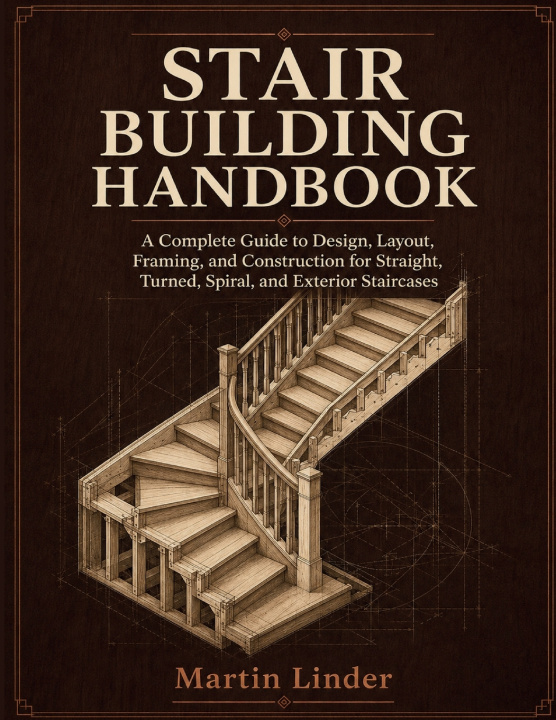
Every staircase carries an invisible contract: that whoever built it got the math right, cut the str...
Cijeli opis
Libristo kod: 53482612
?
 134 b
134 b
 Novo
Novo
134 b
Novo
55.16
€
Vanjske zalihe
Šaljemo za 14-21 dana
Do 30 dana za povrat

Every staircase carries an invisible contract: that whoever built it got the math right, cut the stringers true, and followed code closely enough that no one climbing it will ever think twice about their footing.
Most builders piece together stair knowledge in fragments - a technique from a mentor, a code number memorized from an inspector, a workaround found the hard way on a jobsite. Stair Building Handbook brings those fragments together into one comprehensive, code-aware reference for the full arc of the trade, from your first stringer layout to the winder calculation you'll need to double-check years from now.Inside, you'll learn how to:
- Build the vocabulary and code framework (IRC and IBC) behind every stair decision
- Calculate rise, run, and stringer length, then lay out cut, housed, or mono stringers step by step
- Frame and build every configuration you'll meet on the job - straight runs, L- and U-shaped turns with landings or winders, spiral and curved staircases
- Install code-compliant handrails, guardrails, balusters, and newel posts that pass inspection the first time
- Handle exterior and deck stairs, from footings and drainage to weather-resistant materials
- Diagnose and repair common stair problems, and bring older staircases up to current code
It's written for carpenters and contractors building stairs as part of broader framing work, finish carpenters formalizing their skills, apprentices in a notoriously math-intensive trade, remodelers working on stairs that no longer meet code, and serious do-it-yourself builders planning a custom staircase of their own. Where older stairbuilding references predate composite decking and current code cycles, this handbook reflects how stairs are actually designed, built, and inspected today.
Pick it up for your first stringer layout. Keep it on the shelf for the day, years from now, when you need to double-check a winder calculation.
Glumica
&
Poliglotkinja
EWA KASP
za
Pusti video


Libristo ima najveći izbor literature na stranim jezicima. Zato svoje knjige kupujem ovdje.
Informacije o knjizi
Puni naziv
Stair Building Handbook
Autor
Martin Linder
Jezik
Engleski
Engleski
Uvez
Knjiga - Meki uvez
Datum izdanja
2026
Broj stranica
250
EAN
9798191300153
Libristo kod
53482612
Nakladnici
Independently published
Težina
590
Dimenzije
216 x 280 x 13

Poklonite ovu knjigu još danas
To je jednostavno
1 Dodajte knjigu u košaricu i odaberite isporuku kao poklon 2 Zauzvrat ćemo vam poslati kupon 3 Knjiga dolazi na adresu poklonoprimca
Književni savjetnik Libroamiko
Korištenjem ovog chata komunicirate s generativnom umjetnom inteligencijom. Korištenjem istog također pristajete na obradu osobnih podataka.
Dobar dan! Ja sam Libroamiko, vaš književni savjetnik.
Kako vam mogu pomoći?
Dobar dan, ja sam Libroamiko, mogu li vam pomoći?