
 Kontakt
 Kako kupovati
Dostava
Savjetnik za kupnju
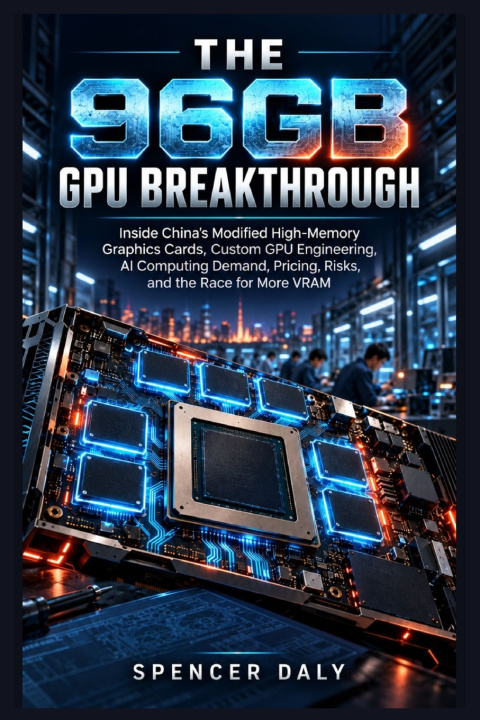
THE 96GB GPU BREAKTHROUGH
Inside China's Modified High-Memory Graphics Cards, Custom GPU Engineering, AI Computing Demand, Pricing, Risks, and the Race for More VRAM
 Engleski
 40 b
40 b
 Novo
Novo
Do 30 dana za povrat

What happens when a graphics card designed with 32 GB of memory is rebuilt with an extraordinary 96 GB?
THE 96GB GPU BREAKTHROUGH takes readers inside one of the most unusual developments in modern graphics hardware: the rise of modified, ultra-high-memory GPUs built for the growing demands of artificial intelligence, content creation, research, and advanced computing.
At the center of the story is a remarkable 96GB GPU that challenges the traditional divide between consumer graphics cards and expensive professional hardware. With interest in high memory GPU systems rising rapidly, developers, AI enthusiasts, researchers, and hardware fans are asking an important question: how much does additional VRAM really change what a graphics card can do?
This book explains why the modern AI graphics card has become about much more than gaming performance. Today, AI computing hardware must handle large language models, image generators, video tools, scientific workloads, and enormous datasets. In many of these tasks, memory capacity can become just as important as raw processing speed.
Readers will discover how an unofficial GPU memory upgrade can transform the usefulness of powerful hardware and why VRAM for AI has become one of the most discussed specifications among people running models on their own systems. As interest in local AI hardware grows, more users are searching for ways to work with large models without depending completely on cloud computing.
The book examines how an AI workstation GPU differs from a standard gaming card and why independent workshops are experimenting with the custom graphics card market. It looks at the engineering behind a modified graphics card, including custom circuit boards, transplanted GPU processors, memory placement, cooling, power delivery, and firmware changes.
You will also learn about GPU hardware engineering and the difficult work involved in graphics card modification. Increasing memory is not as simple as soldering extra chips onto a board. The GPU, memory channels, firmware, PCB design, cooling system, and power delivery must all work together.
At the heart of this development is GPU memory technology. The book explains GDDR7 memory in clear language and shows why a card carrying 96GB graphics memory could appeal to people working with demanding artificial intelligence applications.
For readers interested in machine learning hardware, this story offers a useful look at why memory capacity matters when training, fine-tuning, or running AI models. The same applies to anyone researching a deep learning GPU or trying to understand the hardware requirements behind modern generative systems.
As generative AI hardware becomes more powerful, models are also becoming larger. That has increased interest in the large language model GPU, where enough memory can mean the difference between running a model directly on one graphics card and having to divide it across several machines.
But more memory does not automatically mean a better product.
This book looks carefully at the promises and risks surrounding these modified cards. A high performance GPU built outside the normal manufacturing process may offer impressive specifications, but buyers must also consider firmware compatibility, memory errors, temperatures, driver support, power demands, warranty coverage, and long-term reliability.
The growing use of the consumer GPU AI market also raises another question: how close can modified consumer hardware come to professional equipment?


Informacije o knjizi
Engleski

Poklonite ovu knjigu još danas
To je jednostavno
1 Dodajte knjigu u košaricu i odaberite isporuku kao poklon 2 Zauzvrat ćemo vam poslati kupon 3 Knjiga dolazi na adresu poklonoprimcaDobar dan! Ja sam Libroamiko, vaš književni savjetnik.
Kako vam mogu pomoći?