
 Kontakt
 Kako kupovati

Dostava
Savjetnik za kupnju
 Engleski
 33 b
 Novo
Do 30 dana za povrat

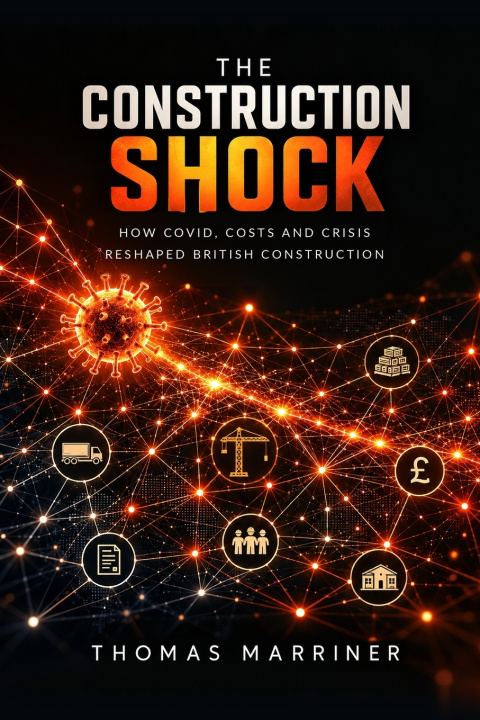
When COVID-19 reached Britain in 2020, construction did not simply stop. Some sites closed. Others carried on. Many reopened before they could work as they had before.
Why could a building site be legally permitted to operate and still fall behind? What happened when workers, materials, deliveries and project programmes no longer lined up? And why did construction's return to work fail to restore the time, money and confidence on which so many projects depended?
In The Construction Shock, Thomas Marriner follows the disruption from the site gate and the workface through the supply chain, into contracts, company finances and the decisions that determine what gets built. Beginning with the industry as it stood before the pandemic, he explores the first interruption, the difficult restart and the overlapping pressures that followed: shortages, inflation, energy costs, war, higher borrowing costs and changing demand.
Drawing on official statistics, real project examples, company accounts and construction contracts, the book explains:
Why construction sites in England, Scotland, Wales and Northern Ireland faced different rules, guidance and decisions.
Why reopening a site did not necessarily mean returning to normal productivity or recovering a delayed programme.
How labour shortages, disrupted training, unreliable deliveries and rising material prices affected the people trying to build.
Why a contractor might be granted more time without being paid more money - and why profit on paper is not the same as cash in the bank.
What the rise and fall of construction insolvencies can tell us, and why a company's collapse years after 2020 cannot automatically be blamed on COVID.
How development costs, interest rates and investment viability changed what clients could afford to commission.
Which effects genuinely belonged to the pandemic, which were already present and which came from later, separate shocks.
This is neither a claim that COVID permanently broke construction nor a story in which every difficulty can be explained by a single crisis. It is an evidence-led account of an industry built on interdependent promises - and what happens when several of those promises become harder to keep at once.
Who should read this book?
The Construction Shock is written for all people in construction; including construction managers, engineers, quantity surveyors, tradespeople, designers, subcontractors, developers and clients. It is equally accessible to students, new entrants and curious general readers who want to understand how Britain's buildings and infrastructure are delivered, why projects can be delayed or financially troubled, and how the industry changed through the 2020s.
The central question is not simply when Britain started building again. It is what returned to normal - and what did not.


Informacije o knjizi
Engleski
Kategorija

Poklonite ovu knjigu još danas
To je jednostavno
1 Dodajte knjigu u košaricu i odaberite isporuku kao poklon 2 Zauzvrat ćemo vam poslati kupon 3 Knjiga dolazi na adresu poklonoprimcaDobar dan! Ja sam Libroamiko, vaš književni savjetnik.
Kako vam mogu pomoći?