
 Kontakt
 Kako kupovati
Dostava
Savjetnik za kupnju
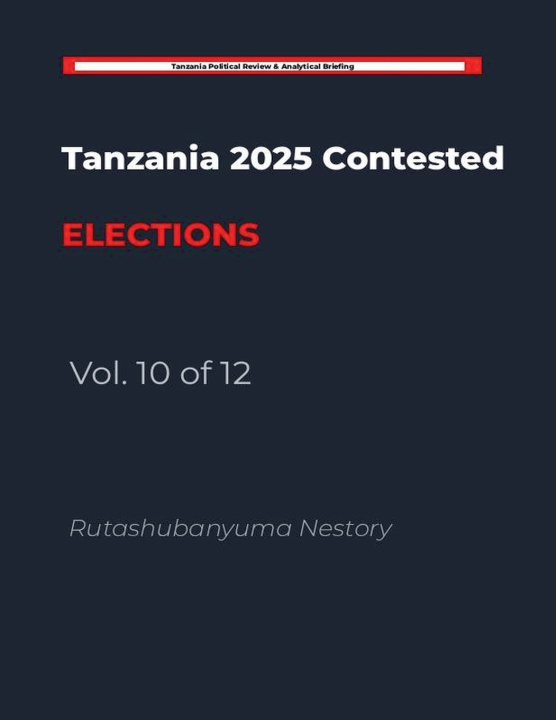
THE HANDCUFFED ELECTION
Tanzania's 2025 General Election: A Study in Institutional Constraint and Democratic Contestation
 Engleski
 55 b
55 b
 Novo
Novo
Do 30 dana za povrat

Tanzania's 2025 General Election unfolded as a moment of striking contradiction.
The economy recorded average growth of approximately 6 percent, yet youth unemployment and underemployment remained persistent. Courts issued rulings on digital forensic evidence that significantly weakened the prosecution's case against opposition leader Tundu Lissu, yet he remained in custody on treason charges. Eighteen political parties participated in the electoral process, yet key opposition actors were disqualified. International observers noted limited electoral disruption, yet concluded that the process "fell short" of regional democratic standards.
In this tenth volume of a twelve-part series, Rutashubanyuma Nestory examines Tanzania's 2025 election as a case of institutional constraint and interpretive fragmentation. Drawing on legal proceedings, macroeconomic data, human rights reporting, electoral observation missions, and political analysis, the volume argues that Tanzania's political system remains procedurally functional while its legitimacy is increasingly contested.
Across its chapters, the book explores:
The evidentiary crisis in the treason trial of Tundu Lissu, where technically credible digital evidence was excluded on procedural grounds
The paradox of economic growth without inclusive employment, shaped by skills mismatches, sectoral concentration, and demographic pressure
The post-election human rights allegations documented by international organizations, raising urgent questions of accountability and state violence
The postponement of Maasai circumcision rituals to enable youth voting, illustrating the adaptation of cultural systems to democratic participation
The SADC Electoral Observation Mission's conclusion that voters "could not express their democratic will"
The contested role of the diaspora as both development partners and critical political actors
The unconventional campaign rhetoric in Zanzibar's presidential race, reflecting the symbolic breadth-and occasional absurdity-of electoral politics
At its core, this volume advances a central thesis: Tanzania's 2025 election is best understood not as a single contest for power, but as a struggle over the meaning of the state itself.
The struggle is not only over votes, but over interpretation-who defines governance, who benefits from it, and who holds authority over its narrative.
Whether these competing narratives converge or further fragment will shape Tanzania's political trajectory well beyond the 2025 electoral cycle.
This volume is essential reading for scholars, policymakers, journalists, and citizens seeking to understand the evolving nature of democratic governance in contemporary Africa.


Informacije o knjizi
Engleski

Poklonite ovu knjigu još danas
To je jednostavno
1 Dodajte knjigu u košaricu i odaberite isporuku kao poklon 2 Zauzvrat ćemo vam poslati kupon 3 Knjiga dolazi na adresu poklonoprimcaDobar dan! Ja sam Libroamiko, vaš književni savjetnik.
Kako vam mogu pomoći?