
 Kontakt
 Kako kupovati
Dostava
Savjetnik za kupnju
 Engleski
 33 b
33 b
 Novo
Novo
Do 30 dana za povrat

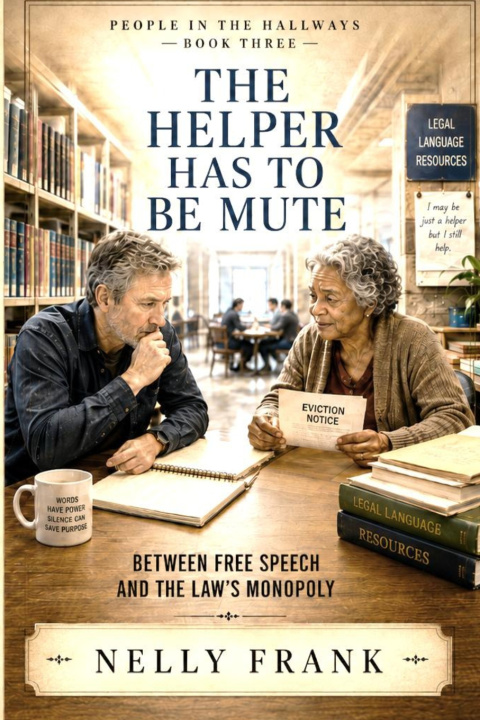
THE HELPER HAS TO BE MUTE
Robert Wright works in a quiet annex beneath a New York library, where ordinary people bring the legal documents they cannot understand-eviction notices, collection letters, court summons, foreclosure warnings, and other papers whose consequences may change their lives.
Robert is not a lawyer. He does not give legal advice. He explains words.
Again and again, he watches the same transformation: fear becomes understanding when a difficult document is broken into plain language. Over time, Robert begins to recognize patterns in the confusion. With Marianne Laurent-Sánchez, his closest collaborator, he develops a five-step method-IDEAL: Identify, Deconstruct, Extract, Arrange, Learn-designed to help people understand complex documents without making decisions for them.
But success attracts attention.
As more people begin using the method, legal regulators question whether Robert's explanations have crossed the line into the Unauthorized Practice of Law. The dispute turns on a difficult question: when does explaining legal information become legal practice-and when does restricting that explanation become a restriction on speech?
What begins at a small library desk grows into a battle over professional regulation, the First Amendment, access to justice, and the right of ordinary people to understand the language that governs their lives.
As the case moves through the courts, Robert and his allies discover that understanding is only the first barrier. Even people who understand their documents may still lack the time, money, procedural knowledge, or professional help needed to act.
The Helper Has to Be Mute is a civic and legal thriller about language, power, dignity, and the boundary between helping someone understand and telling them what to do.
At its heart is a simple question:
If the law applies to everyone, how understandable should it have to be?
And behind that question lies another:
Can a society protect people from bad legal advice without making ordinary explanation too dangerous to offer?


Informacije o knjizi
Engleski
Kategorija
