
 Kontakt
 Kako kupovati
Dostava
Savjetnik za kupnju
The Iturup Protocol
 Engleski
 47 b
47 b
 Novo
Novo
Do 30 dana za povrat

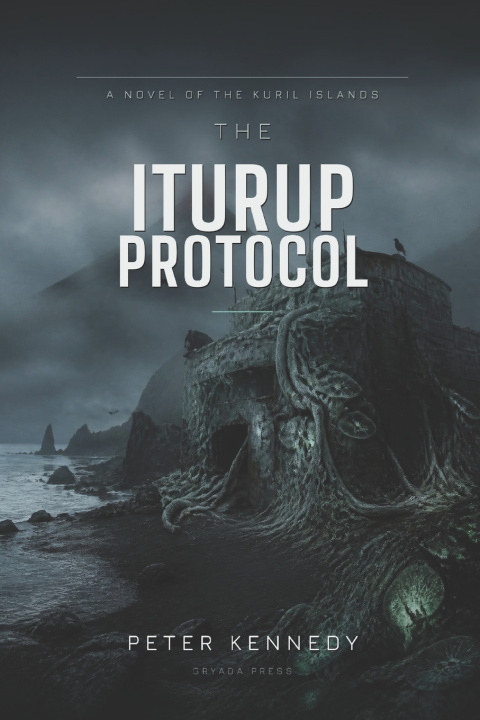
The Iturup Protocol is a standalone science-fiction survival-horror thriller set on Iturup, the largest of the disputed Kuril Islands. At 97,000 words, the novel follows a joint Japanese-Russian expeditionary force that lands on the island in a carefully staged rescue-and-containment operation-only to discover that the very thing they were sent to secure has been watching them for years.
The novel is anchored by two commanding officers pushed to the limits of duty and conscience: Lieutenant Commander Rina Odagiri, a disciplined JMSDF intelligence officer haunted by a brother lost in a classified naval incident, and Kapitan-leytenant Maksim Voronin, a Russian Navy submariner who trusts instruments more than men. Their uneasy alliance is forged under artillery fire and then tested by a bioweapon that does not behave like a weapon at all.
That weapon is Plantania-an engineered, sentient floral network created by the black-budget biotech firm Gen-Nova Biosciences. Part organism, part colony, part archive, Plantania colonizes soil, corpses, and eventually the living, reshaping its hosts into something it calls a "Graft." It does not speak in words but through pheromones, root-pressure, and the recombined memories of the dead. It learns. It negotiates. It wants to continue.
When Odagiri and Voronin lead their teams into the island's interior, they find the ruins of a Soviet-era research campus swallowed by a greenhouse jungle of silver vines, bioluminescent fruit, and bone-laced compost. The last surviving scientist's log frames the project not as a weapons program but as a proof of concept for a post-human ecology. As the two nations' agendas diverge, the island becomes a closed system: both governments know more than they admit, both have ordered the mission to fail in different ways, and the only way out is through a storm that may already be inside the survivors.
The supporting cast gives the nightmare its human cost. Petty Officer First Class Muraki, a JMSDF medic who keeps a field diary of moral equations; Tabata, a junior SIGINT operator who learns that the plants are listening to her frequencies; CPO Kanda, a career boatswain who dies holding a blast door so the others can reach the cold-storage vault; Dr. Ingrid Voss, a German-Argentine geneticist who helped birth the organism and now wants to unmake it; Captain-Lieutenant Popov, Voronin's loyal deputy, whose final line is eaten mid-sentence by a silver vine; and Mira Tsutsui, a feral teenage survivor who has spent eight months living under bedsheet rules and becomes the bridge between the human and the weeded world.
Structured in five parts-Landfall, The Orangery, The Uneasy Treaty, Heartwood, and The Cold Door-the novel moves from military procedural to ecological horror, then to political thriller and finally to an intimate, desperate escape. Each chapter is titled by a Tarot card from the Marseille deck, echoing the island's own symbolic logic: the Fool, the Tower, the Hanged Man, the World, the Moon.
Thematically, The Iturup Protocol asks what happens when survival requires cooperation with the thing that wants to consume you, and whether a nation can call something "evil" when it paid for its creation. It explores the ethics of engineered life, the porous border between infection and communion, and the loneliness of command in a theater where every side has already betrayed you.
The ending is a departure at dawn in a borrowed fishing boat, five survivors bound for mainland Japan, a storm closing in, and a single UV torch flicked on in the cabin. The light reveals what words could not. The boat keeps moving. The choice is made in silence.


Informacije o knjizi
Engleski
Kategorija
