
 Kontakt
 Kako kupovati
Dostava
Savjetnik za kupnju
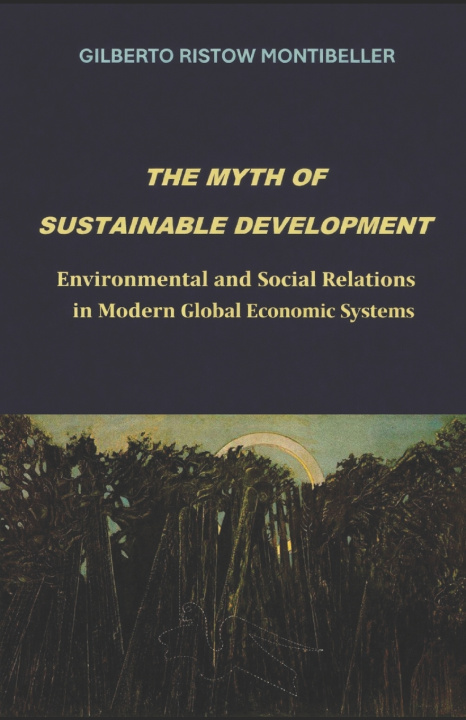
THE MYTH OF SUSTAINABLE DEVELOPMENT
Environmental and Social Relations in Modern Global Economic Systems
 Engleski
 40 b
40 b
 Novo
Novo
30 dana za povrat kupljenih proizvoda

Sustainable development is a concomitant improvement in social, economic, and environmental dimensions that is universally aspired to. Authors of environmental economics present a series of propositions in this direction. However, is sustainability possible at the local, national, and global levels and in the medium or long term? This new paradigm of sustainability emerged around five decades ago, driven by the environmental movement, and is now disseminated across diverse scientific fields, business, and the public. To obtain answers to the referred questions, we consider concepts, theories, indicators, indices, methods, and propositions from three branches of environmental economics (eco-neoclassical, ecological, and eco-dialectical economics), and we examine the evolution and trends of data. Considering the nature-economy nexus, we examine the contradictory process: the greater the economy relies on nature, the more it depletes natural resources and causes environmental degradation. For this, we consider CO₂ emissions and the use of other non-renewable resources over the last four decades. Then, we study the recycling of materials, which authors sometimes present as a solution to both resource depletion and environmental degradation. We consider the importance, feasibility conditions, and limitations of recycling. Another question is that environmental problems transcend borders (of an enterprise, city, or country); one polluter can seem sustainable but transfer its environmental damage to another place. We examine this case with the concepts of environmental space and unequal eco-trade. We also consider the role of social costs, such as environmental costs, in the functioning of the economic system. Finally, with the dialectical relations between nature and the economy, we search for both restrictive and favorable situations. By exposing the severity of environmental problems and their trends within the modern economic systems, we hope this book contributes to a better understanding of the effectiveness of actions towards sustainable development.


Informacije o knjizi
Engleski
