
 Kontakt
 Kako kupovati
Dostava
Savjetnik za kupnju
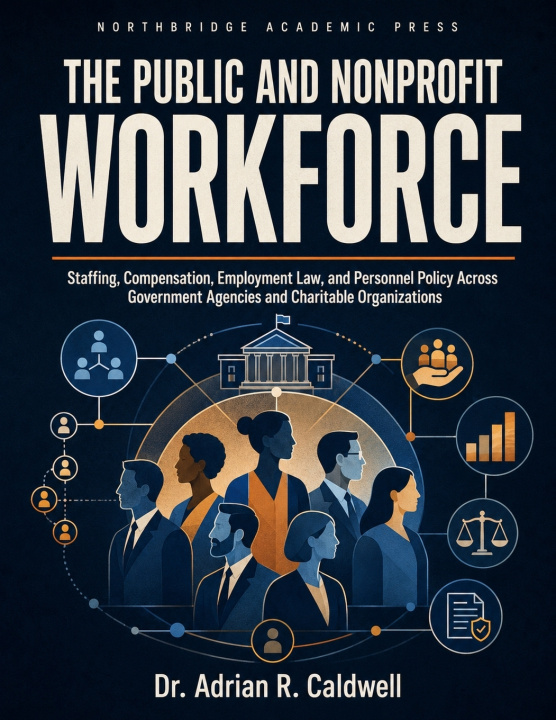
The Public and Nonprofit Workforce
How Governments Decide, Tax, Spend, and Borrow A Graduate Text for MPA and Public Policy Programs
 Engleski
 191 b
191 b
 Pripremamo
 Novo
Novo
Do 30 dana za povrat

A vacancy has been posted for nine weeks. The first-choice candidate withdrew last Tuesday, having
accepted an offer from an employer that made its decision in four days. Eleven blocks away, a charitable
organization can decide today - but cannot say whether the position will still exist when the grant
ends.
Both managers will blame salary. Both explanations will be incomplete. The real trouble is that neither
has a personnel system able to show what actually went wrong, and most of the guidance available to
them was written for employers who face neither constraint.
Standard treatments of this subject teach the two sectors separately, or teach them together with the
differences smoothed away. Taught separately, the reader never learns which features of a government
personnel system follow from being governmental and which follow from being large. Taught as one
undifferentiated field, the reader acquires a vocabulary that fits neither employer precisely.
This volume keeps the two side by side and marks the differences as it goes. It works through the
employment relationship in sequence - planning, job analysis, recruitment, selection, legal compliance,
onboarding, development, appraisal, pay, benefits, representation, discipline, separation - and it states
plainly where the evidence is strong, where it is contested, and where a practice is recommended on
reasoning rather than demonstration.
What this book helps you do:
● Separate the constraints that genuinely cannot be moved from the ones that are merely
customary and defended in the language of requirement.
● Recognize when a workforce question has become a legal question - the most valuable legal
skill a non-lawyer can have.
● Build a defensible record before it is needed, rather than reconstructing one during an appeal.
● Understand why a hiring process takes as long as it does, and which parts of the delay are yours
to change.
● Read the evidence behind widely taught practices, including several the field states more
confidently than the research supports.
● Apply every recommendation at reduced scale, in an organization of thirty rather than three
thousand.
Key topics: merit systems, at-will employment, and charitable status; workforce planning under annual
appropriations and grant cycles; job analysis, classification, and essential functions; recruitment,
examination, eligible lists, and structured selection; equal employment obligations, accommodation,
and harassment liability; onboarding, probation, retention, and burnout in helping work; appraisal,
feedback, and goal displacement; pay structures, compression, exempt status, and executive pay rules;
health coverage, pensions, and leave administration; collective bargaining, grievances, and arbitration;
just cause, due process, investigation, and reduction in force; volunteers, boards, contractors, and
interns; and screening technology, privacy, metrics, and audit.
Who it is for: upper-level undergraduates and graduate students heading into public administration or
nonprofit management, and the person already in post who was handed the personnel function along
with everything else.
Every chapter ends in the same place - what to do on Monday, at the scale you actually operate at,
with the resources you actually have. Begin working through the systems you are already inside, and
find out which parts of them were never fixed at all.


Informacije o knjizi
Engleski
