
 Kontakt
 Kako kupovati
Dostava
Savjetnik za kupnju
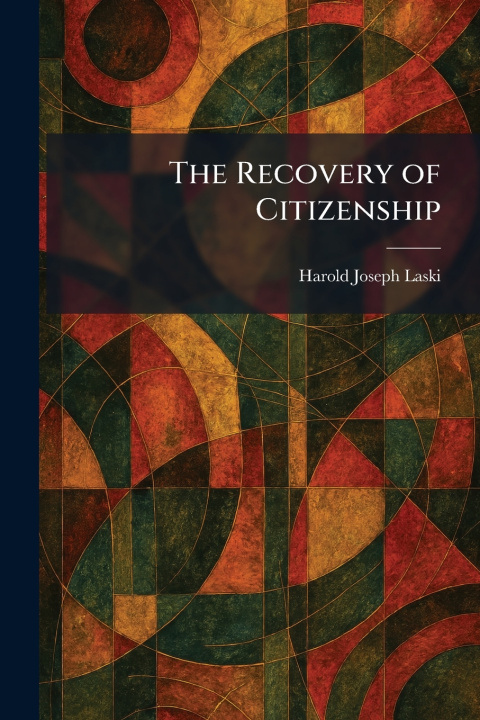
The Recovery of Citizenship
 Engleski
 35 b
35 b
 Novo
Novo
30 dana za povrat kupljenih proizvoda

"The Recovery of Citizenship" is a profound exploration of the individual's role and responsibilities within a modern democratic state. Written by the influential political theorist Harold Joseph Laski, this work addresses the perceived decline of active civic engagement and the necessity of revitalizing the concept of the citizen in an increasingly complex and bureaucratic world.
Laski examines the structural and social barriers that hinder political participation, arguing that the health of a democracy depends on the informed and passionate involvement of its people. He delves into the relationship between the state and the individual, emphasizing that citizenship is not merely a legal status but a moral commitment to the common good. Through his rigorous analysis, Laski advocates for a more inclusive approach to governance, where the rights and duties of the citizen are central to the functioning of society.
This work remains a significant contribution to political science and historical thought, offering timeless insights into the challenges of maintaining a vibrant democratic culture. Readers interested in the history of political theory, the evolution of civil rights, and the philosophy of governance will find "The Recovery of Citizenship" to be a compelling and intellectually stimulating read.
This work has been selected by scholars as being culturally important, and is part of the knowledge base of civilization as we know it. This work was reproduced from the original artifact, and remains as true to the original work as possible. Therefore, you may see the original copyright references, library stamps (as most of these works have been housed in our most important libraries around the world), and other notations in the work.
This work is in the public domain in the United States of America, and possibly other nations. Within the United States, you may freely copy and distribute this work, as no entity (individual or corporate) has a copyright on the body of the work.
As a reproduction of a historical artifact, this work may contain missing or blurred pages, poor pictures, errant marks, etc. Scholars believe, and we concur, that this work is important enough to be preserved, reproduced, and made generally available to the public. We appreciate your support of the preservation process, and thank you for being an important part of keeping this knowledge alive and relevant.


Informacije o knjizi
Engleski
