
 Kontakt
 Kako kupovati
Dostava
Savjetnik za kupnju
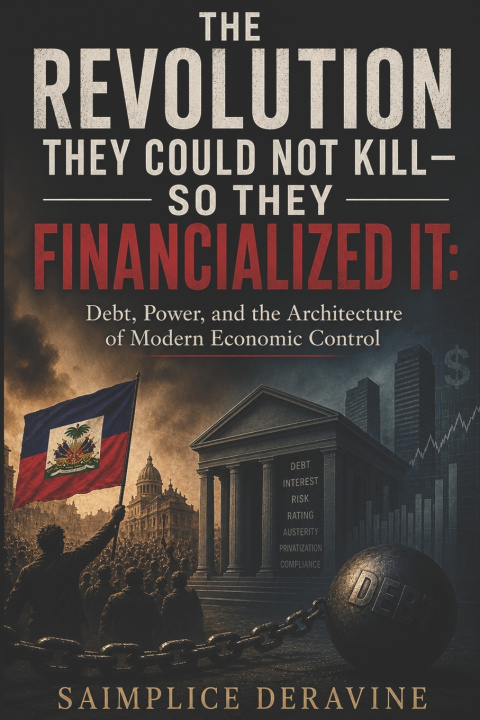
THE REVOLUTION THEY COULD NOT KILL- SO THEY FINANCIALIZED IT!
 Engleski
 36 b
36 b
 Novo
Novo
Do 30 dana za povrat

In 1804, Haiti accomplished what the colonial world believed impossible. Formerly enslaved people defeated one of Europe's most powerful empires, destroyed slavery on their soil, and created the world's first independent Black republic.
But winning independence did not end the struggle for sovereignty.
The Revolution They Could Not Kill: So They Financialized It examines what happened after the battlefield changed. Saimplice Deravine traces Haiti's history from revolution and independence through the French indemnity of 1825, foreign loans, banking influence, control of customs revenue, the removal of Haiti's gold reserves, the United States occupation, and the later emergence of foreign aid and economic dependency.
At the center of the book is a difficult question: Can a nation be politically independent while its economic choices remain constrained by debt, foreign influence, weak institutions, and dependency?
Following the movement of money as closely as the movement of armies and political leaders, Deravine explores how financial power can shape national sovereignty long after formal colonial rule has ended. At the same time, he confronts corruption, political division, leadership failures, and institutional weakness within Haiti itself, showing how internal and external forces have repeatedly reinforced one another.
This is not simply a history of debt, occupation, or foreign intervention. It is a study of freedom, power, responsibility, and the unfinished work of sovereignty.
From the Revolution of 1804 to the challenges facing Haiti today, the book asks readers to reconsider what independence truly requires and what must be built to preserve it across generations.


Informacije o knjizi
Engleski
Kategorija

Poklonite ovu knjigu još danas
To je jednostavno
1 Dodajte knjigu u košaricu i odaberite isporuku kao poklon 2 Zauzvrat ćemo vam poslati kupon 3 Knjiga dolazi na adresu poklonoprimcaDobar dan! Ja sam Libroamiko, vaš književni savjetnik.
Kako vam mogu pomoći?