
 Kontakt
 Kako kupovati
Dostava
Savjetnik za kupnju
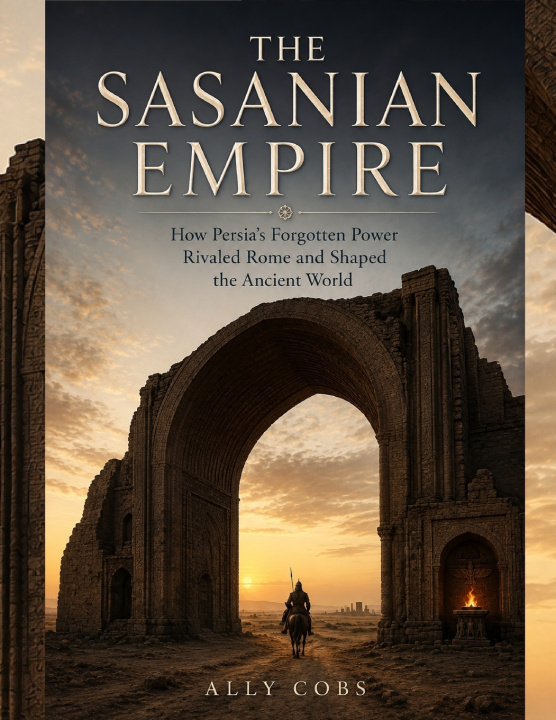
The Sasanian Empire
How Persia's Forgotten Power Rivaled Rome and Shaped the Ancient World
 Engleski
 33 b
33 b
 Novo
Novo
Do 30 dana za povrat

For four centuries, a Persian dynasty ruled an empire that could match Rome blow for blow, and history barely remembers it.
While the legions of Rome and the domes of Constantinople dominate our picture of the ancient world, another empire stood just as tall on the other side of the Euphrates. The Sassanid Empire ruled from Mesopotamia to Central Asia, commanded the wealth of the Silk Road, and produced kings who called themselves Shahanshah, king of kings. One of them captured a Roman emperor alive on the battlefield. Another built a court of scholars so renowned that fleeing Greek philosophers found refuge there after Byzantium shut its own academies down. This is the story of how that empire rose, ruled, and ultimately fell, and why its disappearance from popular memory says more about the storytellers than the empire itself.
This book traces the Sassanid Empire from its violent birth in 224 CE, when a provincial governor named Ardashir overthrew the crumbling Parthian dynasty and declared himself heir to Cyrus and Darius, through four hundred years of war, reform, and cultural achievement, to its final collapse before the armies of a new faith rising out of Arabia. Along the way, you'll meet the kings who defined the empire's character: Shapur I, who humiliated Rome twice in a single generation; Khosrow I, whose reign of legal and military reform is remembered as Persia's golden age; and Yazdegerd III, the last king of kings, who spent his final years fleeing an empire that no longer answered to his name.
You'll also step inside the world the Sassanids built, a society bound together by Zoroastrian faith, a rigid but resilient class structure, and a monarchy that claimed its authority came directly from the divine. You'll follow the merchants and caravans that carried silk, spices, and coin across a trade network stretching from China to the Mediterranean, and you'll see how a centuries-long rivalry with Rome and Byzantium, fought over the same contested ground again and again, ultimately exhausted both empires at the exact moment a new power was gathering strength in the desert.
Understanding the Sassanids means understanding why the ancient Near East looked the way it did for four hundred years, and why its sudden transformation after 651 CE reshaped the medieval world that followed. Their administration, their scholarship, and even fragments of their religious thought passed directly into the Islamic civilization that succeeded them, a legacy far larger than the borders the empire itself ever held.
This is a story of ambition and reform, of golden ages and internal collapse, and of a civilization that built real, lasting power only to watch it unravel when the world demanded flexibility it could no longer offer. It is history written for readers with no prior background in Persian history, moving in clear chronological order from a single battle in 224 CE to the empire's final hour more than four centuries later.
If you have ever wondered what stood on the other side of Rome's eastern frontier, or how the world of late antiquity gave way to the rise of Islam, this is where that story begins.


Informacije o knjizi
Engleski

Poklonite ovu knjigu još danas
To je jednostavno
1 Dodajte knjigu u košaricu i odaberite isporuku kao poklon 2 Zauzvrat ćemo vam poslati kupon 3 Knjiga dolazi na adresu poklonoprimcaDobar dan! Ja sam Libroamiko, vaš književni savjetnik.
Kako vam mogu pomoći?