
 Kontakt
 Kako kupovati
Dostava
Savjetnik za kupnju
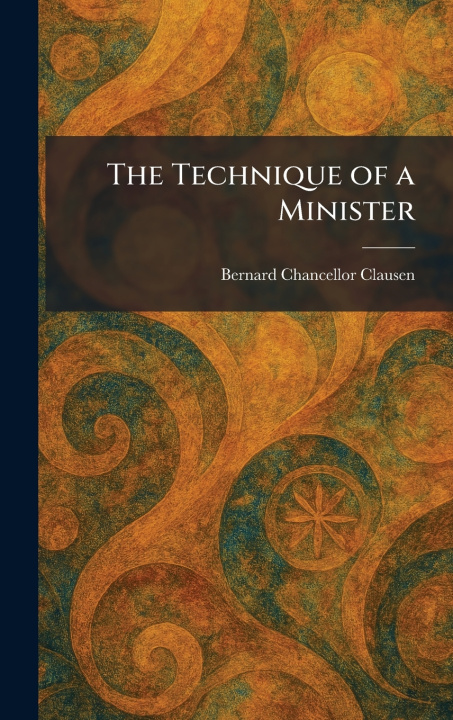
The Technique of a Minister
 Engleski
 74 b
74 b
30 dana za povrat kupljenih proizvoda

"The Technique of a Minister" is a comprehensive guide to the practical and professional aspects of the Christian ministry. Written by Bernard Chancellor Clausen, a prominent figure in early 20th-century religious life, this work delves into the specific methods and strategies required for effective pastoral leadership. The book explores the multifaceted role of a minister, moving beyond spiritual guidance to address the logistical, social, and organizational challenges of running a successful congregation.
Covering topics such as sermon preparation, community engagement, and church administration, "The Technique of a Minister" serves as a manual for those seeking to refine their clerical craft. Clausen emphasizes the importance of precision and intentionality in ministerial work, treating the vocation as both a sacred calling and a disciplined profession. His insights provide a window into the evolution of the American pulpit and the shifting expectations of religious leadership during the 1920s.
This text is an invaluable resource for students of practical theology and historians interested in the development of church management. It offers timeless advice on leadership dynamics and the personal conduct of the clergy, making it a significant contribution to the literature of ministerial training.
This work has been selected by scholars as being culturally important, and is part of the knowledge base of civilization as we know it. This work was reproduced from the original artifact, and remains as true to the original work as possible. Therefore, you may see the original copyright references, library stamps (as most of these works have been housed in our most important libraries around the world), and other notations in the work.
This work is in the public domain in the United States of America, and possibly other nations. Within the United States, you may freely copy and distribute this work, as no entity (individual or corporate) has a copyright on the body of the work.
As a reproduction of a historical artifact, this work may contain missing or blurred pages, poor pictures, errant marks, etc. Scholars believe, and we concur, that this work is important enough to be preserved, reproduced, and made generally available to the public. We appreciate your support of the preservation process, and thank you for being an important part of keeping this knowledge alive and relevant.


Informacije o knjizi
Engleski
