
 Kontakt
 Kako kupovati
Dostava
Savjetnik za kupnju
The Theory of Inner Organization
A Unified Theory of Human, Organizational and Societal Coherence
 Engleski
 82 b
82 b
 Novo
Novo
Do 30 dana za povrat

The Theory of Inner Organization
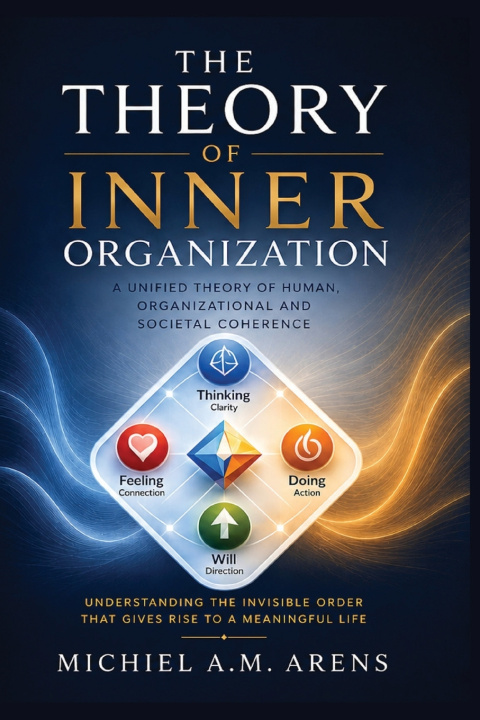
The Theory of Inner Organization is a multidisciplinary framework that explores how the invisible organization within human beings continuously shapes the visible organization of their work, relationships, projects, institutions and society.
For centuries, we have studied organizations primarily from the outside. We have developed management theories, organizational structures, governance models and leadership methodologies to improve performance. These approaches have generated valuable insights, yet remarkably similar patterns continue to appear across industries, cultures and generations. Organizations become increasingly complex, projects lose coherence, communication fragments, bureaucracy expands and capable people often work harder while achieving less than they intended.
The Theory of Inner Organization begins with a different question.
Rather than asking how organizations should be structured, it asks what continuously creates those structures.
Its central observation is that every organization is created, sustained and transformed by people. Every decision, relationship, process, meeting and strategy originates within the people who participate in it. Visible organizations therefore cannot be fully understood without understanding the invisible patterns through which people perceive reality, create meaning, make decisions, build relationships and sustain purpose.
At the heart of the theory lies the proposition that human beings are organized living systems whose quality of organization determines the coherence of everything they create. This inner organization expresses itself through four fundamental human capacities: Thinking, Feeling, Doing and Will. When these capacities work coherently, individuals experience clarity, purpose and effective action. When they become fragmented or unbalanced, confusion, unnecessary complexity and recurring organizational problems naturally emerge.
From this perspective, organizations are not machines that occasionally malfunction, but living expressions of human interaction. Leadership is therefore not primarily the management of other people, but the continual organization of oneself. Culture emerges from shared patterns of meaning, attention and behaviour, while lasting transformation begins by increasing coherence within the people who create organizational reality.
The theory extends beyond leadership. Because the same organizing principles operate within individuals, teams, projects, knowledge systems and societies, it provides a unified framework for understanding disciplines that are often studied separately. Leadership, organizational development, project management, knowledge management, digital transformation, artificial intelligence, education and social development can all be understood as expressions of the same underlying principles.
The Theory of Inner Organization does not replace existing disciplines. Instead, it offers a deeper foundation that reveals how they are interconnected. It invites leaders, professionals, educators and researchers to look beyond isolated events and recognize the recurring patterns that quietly shape human reality from within.
Its central insight is simple:
The quality of every organization is limited by the quality of the inner organization of the people who create it.
By understanding and developing that inner organization, individuals become capable of creating greater coherence not only within themselves, but also within the organizations, projects and societies they help bring into existence.


Informacije o knjizi
Engleski

Poklonite ovu knjigu još danas
To je jednostavno
1 Dodajte knjigu u košaricu i odaberite isporuku kao poklon 2 Zauzvrat ćemo vam poslati kupon 3 Knjiga dolazi na adresu poklonoprimcaDobar dan! Ja sam Libroamiko, vaš književni savjetnik.
Kako vam mogu pomoći?