
 Kontakt
 Kako kupovati
Dostava
Savjetnik za kupnju
 Engleski
 249 b
249 b
Do 30 dana za povrat
Kupci su kupili i






 /
/
 Kalendar
 22.24
€
22.24
€










 /
/
 Meki uvez
48.93
€
Meki uvez
48.93
€







 /
Meki uvez
28.00
€
/
Meki uvez
28.00
€







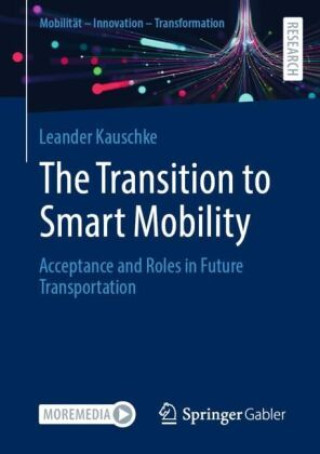
Most contemporary notions of the fairly recent concept 'smart mobility' portray an imminent transition of similar socio-economic consequences as the shift from horses to automobiles did 100 years ago. Present book thus offers an in-depth look at the variables involved in the equation of smart mobility acceptance (1) and envisaged institutional change (2).Both views are embedded in the Multi-Level Perspective. Study 1 develops a structural equation model in SmartPLS. Use cases cover eBikes (N=537), mobility-as-a-service (N=531), and fully automated vehicles (N=558). Based on the results, acceptance relies on five factors: performance expectancy, facilitating conditions, social influence, habit, and hedonic motivation.Study 2 applies the Institutional Role Model (IRM) to better understand system dynamics. Thus, the smart mobility ecosystem is mapped in a structured manner. It identifies nine institutions, as well as four technical and four economic roles. Results of interviews with experts (N=8) support the IRM's significance as a vision provider for a new mobility regime.In the end, these two perspectives amalgamate. This opens a sophisticated space for public debate about the commencing transition to smart mobility.


Informacije o knjizi
Engleski

Poklonite ovu knjigu još danas
To je jednostavno
1 Dodajte knjigu u košaricu i odaberite isporuku kao poklon 2 Zauzvrat ćemo vam poslati kupon 3 Knjiga dolazi na adresu poklonoprimcaMoglo bi vas zanimati i
 /
Tvrdi uvez
78.66
€
/
Tvrdi uvez
78.66
€



 /
Meki uvez
15.66
€
/
Meki uvez
15.66
€




 /
Meki uvez
31.64
€
/
Meki uvez
31.64
€


 /
Meki uvez
82.40
€
/
Meki uvez
82.40
€

 /
Meki uvez
20.31
€
/
Meki uvez
20.31
€
 /
Meki uvez
14.55
€
/
Meki uvez
14.55
€





Dobar dan! Ja sam Libroamiko, vaš književni savjetnik.
Kako vam mogu pomoći?