
 Kontakt
 Kako kupovati
Dostava
Savjetnik za kupnju
 Engleski
 60 b
60 b
 Pripremamo
 Novo
Novo
Do 30 dana za povrat

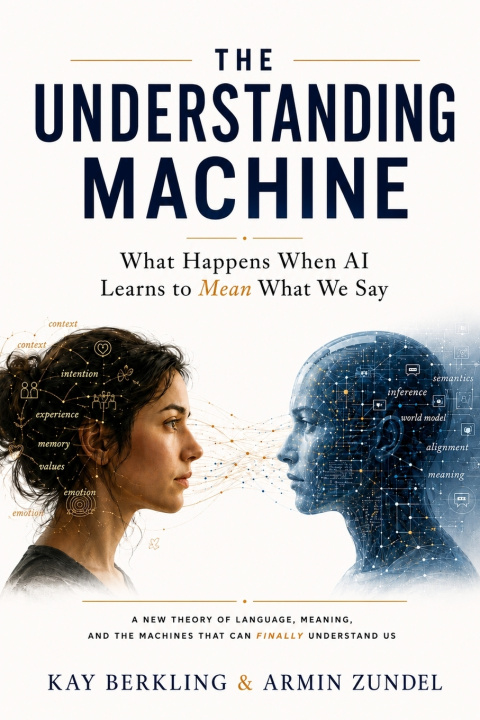
Current theories of meaning - from Saussure through Grice, Gadamer, and speech-act theory - treat communication as compression: a structured situation flattened into words, partially reconstructed by the listener. This book argues that AI-mediated communication constitutes a qualitatively different operation: *transduction*, a structure-preserving mapping between non-identical context-models, in which meaning is carried as relational topology rather than lexical content.
Drawing on Peircean semiotics, distributed cognition, and computational pragmatics, the framework introduces a five-dimensional field model (situational content, causal-temporal structure, goals, interpersonal relations, epistemic status) and applies it across twelve case studies spanning aphasia recovery, cross-linguistic mediation, institutional communication, and clinical follow-up. The analysis yields four falsifiable theses - on transduction, substrate-independence, compression-override, and distributed authorship - alongside design principles for transparency, speaker veto, and field-depth symmetry.
The book is written for researchers in philosophy of language, HCI, and AI ethics, and for informed practitioners working at the intersection of computational systems and human meaning-making.


Informacije o knjizi
Engleski

Poklonite ovu knjigu još danas
To je jednostavno
1 Dodajte knjigu u košaricu i odaberite isporuku kao poklon 2 Zauzvrat ćemo vam poslati kupon 3 Knjiga dolazi na adresu poklonoprimcaDobar dan! Ja sam Libroamiko, vaš književni savjetnik.
Kako vam mogu pomoći?