
 Kontakt
 Kako kupovati
Dostava
Savjetnik za kupnju
 Engleski
 36 b
36 b
 Pripremamo
 Novo
Novo
Do 30 dana za povrat

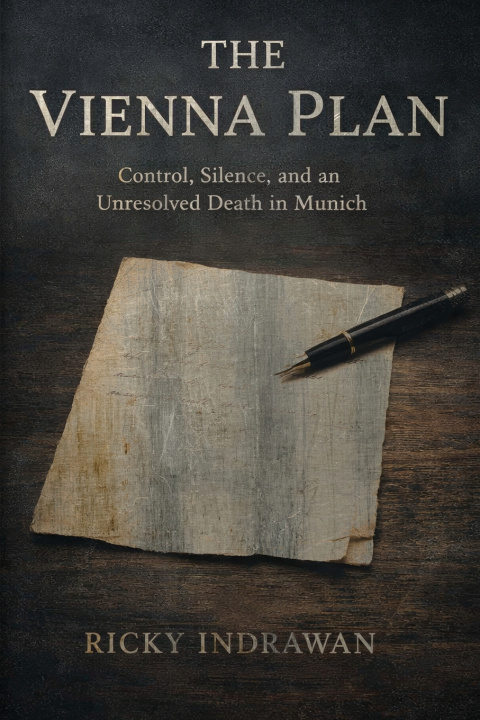
A locked room. A hurried verdict. A death that never settled cleanly into history.
On September 19, 1931, twenty-three-year-old Geli Raubal was found dead inside Adolf Hitler's Munich apartment, with a gunshot wound and Hitler's pistol nearby. The room was reported locked from the inside, and the death was quickly classified as suicide. Yet the limited medical examination, the speed of official closure, political involvement around the scene, and the later loss or destruction of records left a case whose strongest explanation and weakest investigation have remained in tension ever since.
The Vienna Plan is a victim-centered work of historical true crime that returns first to Geli herself. It traces her life from Linz into Hitler's household, the growing restrictions around her movements and relationships, and the struggle over Vienna that came to represent more than a destination. Singing lessons, friends, romance, or simply distance from supervision may all have shaped her plans; the surviving record does not permit one motive to be declared with certainty. What does emerge is a young woman seeking greater independence inside an increasingly controlling domestic world.
The book reconstructs the final quarrel, Hitler's departure from Munich, Geli's unfinished Vienna letter, the discovery of her body, the reported presence of senior Nazi figures before police control was fully established, the official language of suicide, and the rapid removal of the body to Vienna. It follows the case through the funeral, the absence of a full public inquest, damaged investigative files, later attempts to reopen questions, and the refusal of exhumation that left important forensic issues beyond fresh examination.
It also confronts the claims that have kept the case alive: disputed facial injuries, pregnancy rumors, allegations of political concealment, and the theory that Hitler killed Geli or caused her death. Rather than turning suspicion into a verdict, the investigation separates what is documented from what was alleged, repeated, inferred, or never proved. It tests homicide theories against timing, the locked-room problem, the surviving physical record, and the evidentiary gaps created by an investigation that was too thin for the political sensitivity of the death.
The result is not a theatrical solution. The surviving structure most strongly supports a self-caused gunshot, whether deliberate suicide or an accidental discharge that can no longer be reconstructed with confidence, while the compromised handling of the case makes absolute certainty difficult to recover. That distinction is central: political management can damage trust in a verdict without proving a different manner of death.
Written in a restrained, historically grounded, evidence-aware style, The Vienna Plan is for readers drawn to historical true crime, disputed deaths, forensic uncertainty, early Nazi-era history, and cases where power reached the scene before certainty did. It asks not for belief in the most dramatic theory, but for careful attention to what the record can still hold-and to the young woman whose life should remain larger than the mystery surrounding her death.


Informacije o knjizi
Engleski

Poklonite ovu knjigu još danas
To je jednostavno
1 Dodajte knjigu u košaricu i odaberite isporuku kao poklon 2 Zauzvrat ćemo vam poslati kupon 3 Knjiga dolazi na adresu poklonoprimcaDobar dan! Ja sam Libroamiko, vaš književni savjetnik.
Kako vam mogu pomoći?