
 Kontakt
 Kako kupovati
Dostava
Savjetnik za kupnju
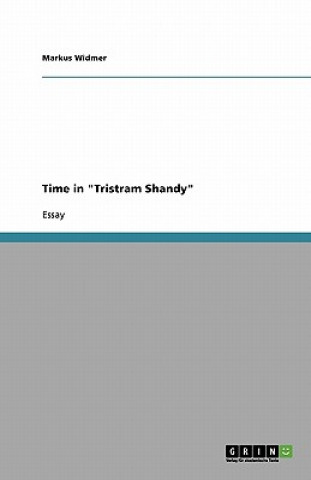
Time in 'Tristram Shandy'
 Engleski
 35 b
35 b
Do 30 dana za povrat
Kupci su kupili i












 /
/
 Meki uvez
 22.01
€
22.01
€

Essay from the year 1998 in the subject English Language and Literature Studies - Literature, printed single-sided, grade: 1 (A), University of Aberdeen (English Department), course: Tristram Shandy, 4 entries in the bibliography, language: English, abstract: Metafiction, according to Patricia Waugh, consists of the construction of a fictional illusion (as in traditional realism) and the laying bare of that illusion . Tristram Shandy, I will argue in this essay, undermines fictional illusion by foregrounding the most fundamental set of all narrative conventions: those concerning the representations of time (Waugh 70). I will exemplify this by trying to apply a conventional set of narratological terms to Tristram Shandy. I will show that these terms, which are based on conventional narratives, are neither exhaustive nor distinctive when one tries to use them for Tristram Shandy. Narrative fiction, Rimmon-Kenan states, has three main aspects: story, text and narration: Story designates the narrated events, abstracted from their disposition in the text and reconstructed in their chronological order, together with the participants in these events. Whereas story is a succession of events, text is a spoken or written discourse which undertakes their telling. ... Time is essential for all of these three aspects, as will become clear in my discussion. Time in itself, following Rimmon-Kenan, can be viewed in three respects: order, duration, and frequency (p. 46). I will focus on the first two aspects since they are more essential to the novel than frequency.4 Finally, I will discuss whether, after my discussion of Tristram Shandy s time structure, one can conclude that the novel is a metafiction according to Waugh s definition of the term.


Informacije o knjizi
Engleski

Poklonite ovu knjigu još danas
To je jednostavno
1 Dodajte knjigu u košaricu i odaberite isporuku kao poklon 2 Zauzvrat ćemo vam poslati kupon 3 Knjiga dolazi na adresu poklonoprimcaMoglo bi vas zanimati i










 /
Meki uvez
24.74
€
/
Meki uvez
24.74
€


 /
Tvrdi uvez
192.62
€
/
Tvrdi uvez
192.62
€
 /
Meki uvez
33.93
€
/
Meki uvez
33.93
€

 /
Meki uvez
12.62
€
/
Meki uvez
12.62
€





Dobar dan! Ja sam Libroamiko, vaš književni savjetnik.
Kako vam mogu pomoći?