
 Kontakt
 Kako kupovati
Dostava
Savjetnik za kupnju
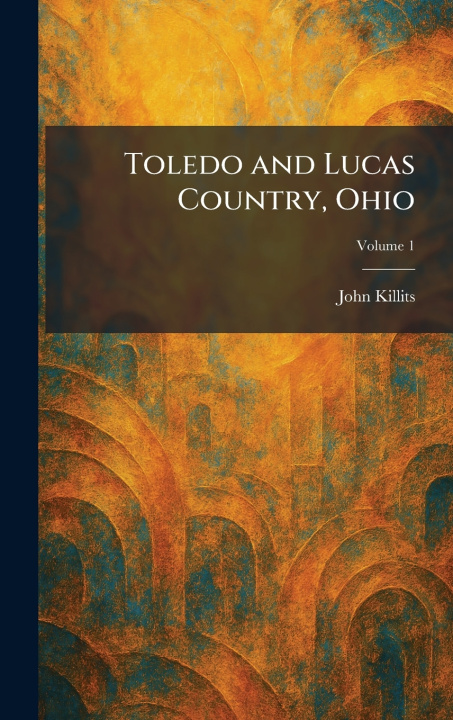
Toledo and Lucas Country, Ohio
 Engleski
 106 b
106 b
30 dana za povrat kupljenih proizvoda

"Toledo and Lucas County, Ohio 1623-1923" is an exhaustive historical narrative detailing the three-hundred-year evolution of one of Ohio's most significant regions. Authored by John Killits, this first volume serves as a comprehensive chronicle of the area's transformation from a contested frontier into a bustling center of American industry and commerce.
The work provides a detailed examination of the social, political, and economic factors that shaped the city of Toledo and the surrounding Lucas County. From the early explorations of the 17th century to the post-World War I era, Killits documents the struggles and triumphs of early settlers, the strategic importance of the Maumee Valley, and the rapid urban growth fueled by the expansion of railroads and shipping. Readers will discover portraits of influential civic leaders and accounts of the institutional developments that established the region's unique character.
Valuable as both a historical record and a genealogical resource, this volume preserves the heritage of Northwest Ohio with meticulous detail. It is an essential reference for those seeking to understand the foundational history of the Great Lakes region and the local stories that contributed to the broader tapestry of American progress.
This work has been selected by scholars as being culturally important, and is part of the knowledge base of civilization as we know it. This work was reproduced from the original artifact, and remains as true to the original work as possible. Therefore, you may see the original copyright references, library stamps (as most of these works have been housed in our most important libraries around the world), and other notations in the work.
This work is in the public domain in the United States of America, and possibly other nations. Within the United States, you may freely copy and distribute this work, as no entity (individual or corporate) has a copyright on the body of the work.
As a reproduction of a historical artifact, this work may contain missing or blurred pages, poor pictures, errant marks, etc. Scholars believe, and we concur, that this work is important enough to be preserved, reproduced, and made generally available to the public. We appreciate your support of the preservation process, and thank you for being an important part of keeping this knowledge alive and relevant.


Informacije o knjizi
Engleski
Kategorija
