
 Kontakt
 Kako kupovati
Dostava
Savjetnik za kupnju
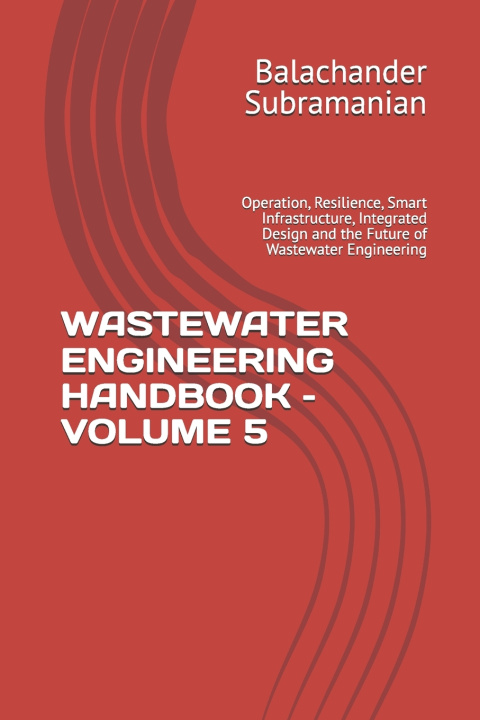
WASTEWATER ENGINEERING HANDBOOK - VOLUME 5
Operation, Resilience, Smart Infrastructure, Integrated Design and the Future of Wastewater Engineering
 Engleski
 90 b
90 b
 Novo
Novo
Do 30 dana za povrat

WASTEWATER ENGINEERING HANDBOOK - VOLUME 5
Operation, Resilience, Smart Infrastructure, Integrated Design and the Future of Wastewater Engineering
The wastewater treatment plant is no longer simply a facility for removing pollutants. It is becoming an intelligent, resilient and resource-recovery system.
Wastewater Engineering Handbook - Volume 5 brings together the practical engineering knowledge required to operate, maintain, troubleshoot, regulate, modernize, design and future-proof wastewater infrastructure.
Beginning with wastewater treatment plant operation and maintenance, the book develops practical approaches to process control, preventive and predictive maintenance, equipment reliability, asset management, energy optimization, operator competency and digital O&M.
It then addresses the difficult realities of plant operation through systematic wastewater process troubleshooting, covering hydraulic and organic overload, toxic shocks, foaming, sludge bulking, rising sludge, poor settling, nitrification failure, membrane fouling, odor, low dissolved oxygen and process instability.
The book also provides detailed treatment of odor control, corrosion, environmental management, occupational health and safety, emergency management, wastewater regulations, standards, permitting and compliance.
A major focus is placed on the future operating environment of wastewater infrastructure. The book examines climate change, flooding, drought, sea-level rise, temperature impacts, critical infrastructure protection, risk-based engineering and climate-resilient wastewater facilities.
For rapidly growing cities, the volume explores smart wastewater systems and large urban infrastructure, integrating smart sewers, pumping stations, SCADA, GIS, online monitoring, digital asset management, predictive maintenance, digital twins, artificial intelligence and real-time decision support. The smart-city framework connects physical infrastructure with sensing, data, intelligence and operator action.
The book then brings these disciplines together through integrated wastewater treatment plant design, covering treatment-train selection, hydraulic profiles, biological treatment, tertiary treatment, disinfection, sludge management, energy recovery, water reuse, redundancy, maintainability, constructability, resilience, instrumentation, automation and lifecycle economics.
An extensive collection of worked engineering calculations and case studies demonstrates how wastewater engineering principles are translated into practical design decisions-from flow estimation, sewer hydraulics, pumping, screening and clarification to activated sludge, SBR, MBBR, MBR, nutrient removal, filtration, disinfection, digestion, biogas and sludge dewatering.
Inside this volume:
- Wastewater Treatment Plant Operation and Maintenance
- Process Troubleshooting and Optimization
- Odor Control and Corrosion Management
- Occupational Health and Safety
- Emergency Management
- Regulations, Standards, Permitting and Compliance
- Climate Change and Resilience
- Smart Cities and Large Urban Wastewater Systems
- Integrated Wastewater Treatment Plant Design
- Worked Design Calculations
- Engineering Case Studies
- Circular Water and Resource Recovery
- Net-Zero and Low-Carbon Treatment
- AI, Digital Twins and Intelligent Treatment
- Future Wastewater Technologies


Informacije o knjizi
Engleski

Poklonite ovu knjigu još danas
To je jednostavno
1 Dodajte knjigu u košaricu i odaberite isporuku kao poklon 2 Zauzvrat ćemo vam poslati kupon 3 Knjiga dolazi na adresu poklonoprimcaDobar dan! Ja sam Libroamiko, vaš književni savjetnik.
Kako vam mogu pomoći?