
 Kontakt
 Kako kupovati
Dostava
Savjetnik za kupnju
When the Indus Speaks
 Engleski
 86 b
86 b
 Novo
Novo
Do 30 dana za povrat

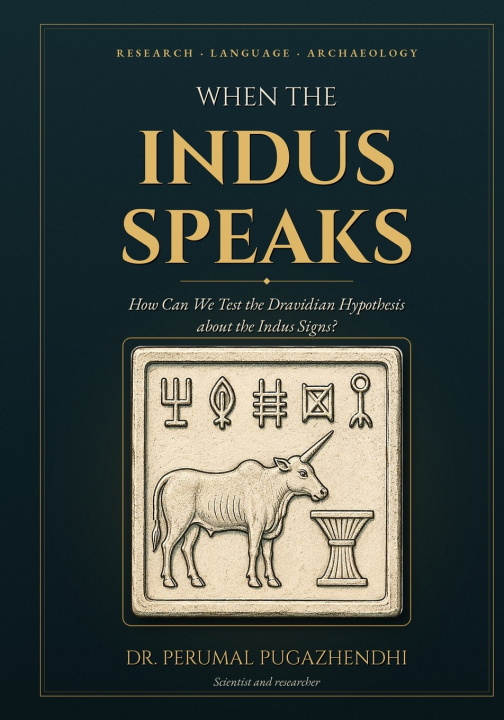
Harappa Pesumbothu (When the Indus Speaks), by Dr. Perumal Pugazhendhi, invites readers into one of South Asia's intriguing historical questions: could the Indus signs have recorded an early Dravidian language, and could traces of that language survive in Tamil and its relatives? Written in Tamil, this book brings archaeology, linguistics and scientific reasoning together to explore a possibility that continues to inspire debate.
Across sixteen chapters, readers travel from the cities, seals and trade networks of the Harappan world to the deep history of southern India. The discussion includes Keezhadi, Porunai, early iron technology, Tamil-Brahmi inscriptions and pottery graffiti. It gives southern communities their own history while examining possible movement, exchange and cultural contact after Harappan urban decline. Ancient DNA enters the discussion with a distinction between population history and language identity.
The book organizes its inquiry around five separate hypotheses: an early Dravidian language in the Harappan world; meaningful patterns in the arrangement of Indus signs; the possible survival of ancient words; connections in material culture; and the movement and interaction of people toward the south. An E1-E5 evidence ladder helps readers distinguish established knowledge, interpretations and proposals that still require testing. Each claim carries its own burden of evidence.
A central idea is to study structure before assigning meanings. Where does a sign appear? Which signs accompany it? Does a proposed reading explain repeated patterns and predict examples that were not used to develop it? The fish sign and possible readings such as mīn, ūr, nīr, kal and āḷ become worked examples of this approach. Numbers, measures, commodities and trade provide further ways to ask whether a suggested interpretation fits the objects and their archaeological context.
The discussion of Tamil and Proto-Dravidian examines what linguistic comparison can reveal about older words and grammar. Chapters on pottery graffiti and Tamil-Brahmi ask what would be needed to establish historical continuity with the Indus signs. Similar shapes, familiar words and shared cultural practices invite investigation, but chronology, context and competing explanations must also be considered. Readers learn to ask what would strengthen a connection and what evidence would require it to be revised.
Illustrations, comparison tables, reader exercises, a glossary, a timeline and appendices support the journey. Sign plates introduce the visual material, while proposed tests and evaluation methods show how research could proceed. The book also separates its reported preliminary calculations from independently reproduced findings, making the limits of the available evidence visible. References and an index help readers return to sources and pursue questions beyond the main narrative.
Drawing on more than forty years of scientific experience, the author combines a personal commitment to Tamil heritage with a willingness to question attractive conclusions. Students, general readers and those interested in ancient South Asia can use the book to explore both the historical debate and the habits of careful inquiry. Its guiding invitation is simple: cherish the past, examine the evidence and keep asking better questions. The relationship between Harappa, Dravidian languages and Tamil remains a question for research, with new discoveries able to change the answer.


Informacije o knjizi
Engleski

Poklonite ovu knjigu još danas
To je jednostavno
1 Dodajte knjigu u košaricu i odaberite isporuku kao poklon 2 Zauzvrat ćemo vam poslati kupon 3 Knjiga dolazi na adresu poklonoprimcaDobar dan! Ja sam Libroamiko, vaš književni savjetnik.
Kako vam mogu pomoći?