
 Kontakt
 Kako kupovati
Dostava
Savjetnik za kupnju
 Engleski
 29 b
29 b
 Pripremamo
 Novo
Novo
Do 30 dana za povrat

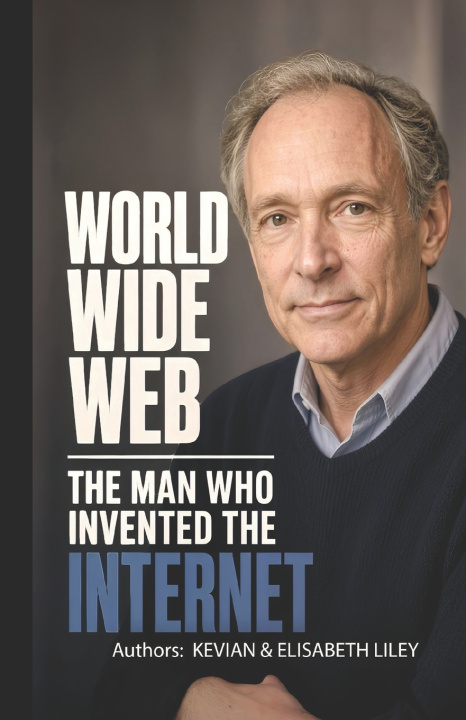
Synopsis:
Timothy John Berners-Lee was born in London on 8 June 1955 to Conway Berners-Lee and Mary Lee Woods, two mathematicians who had met while programming the Ferranti Mark 1, the first commercially sold computer. Growing up in a household where punched cards and circuit diagrams were part of daily life, Tim developed early passions for model railways and electronics, teaching himself to solder and build control systems in a garden shed in southwest London. These childhood experiments with systems and connections laid the groundwork for a lifetime spent thinking about how information moves from one point to another.
After attending Emanuel School in Wandsworth, where his practical skills in electronics and mathematics set him apart, Tim won a place at The Queen's College, Oxford. There he studied physics, achieving a first-class degree, but his most formative educational experience was building his own computer from a salvaged television set and a Motorola microprocessor.
After three years back in England at Image Computer Systems, Tim returned to CERN in 1984 as a fellow. The information chaos had grown worse. The laboratory was building the Large Electron-Positron Collider, generating vast quantities of documentation, and the arrival of the Internet at CERN meant data was flowing in from across the world with no system to organise it. Tim spent years observing the problem, refining an idea that had begun with Enquire. On 12 March 1989, he submitted a proposal titled "Information Management: A Proposal" to his superiors. His boss, Mike Sendall, scribbled "Vague but exciting" across the top and gave him permission to proceed, along with a NeXT computer.
Between 1990 and 1991, Tim wrote the foundational technologies of the World Wide Web. He created HTML, a simple markup language derived from SGML. He designed HTTP, a lightweight protocol for requesting documents across a network. He devised the URL, a universal addressing scheme that could identify any resource on any computer. He wrote the first browser, called WorldWideWeb, which ran on his NeXT machine and doubled as an editor. He wrote the first server software, httpd, and installed it on the same NeXT computer, which he labelled with a handwritten warning: "This machine is a server. DO NOT POWER IT DOWN!!" The first website, http://info.cern.ch, went live in 1991, initially hosting only a handful of pages about the project itself.
The critical decision came on 30 April 1993, when CERN released the web software into the public domain, renouncing all intellectual property rights. Tim had argued forcefully for this, understanding that a proprietary web would be a dead web. The gates opened. Mosaic, Netscape, and eventually Internet Explorer brought graphical browsing to the masses. Amazon, eBay, Google, and the entire edifice of modern e-commerce were built on protocols that Tim had given away for nothing.
This book traces that journey from a post-war London childhood to the creation of the single most consequential information system in human history. It describes the technical craft, the institutional resistance, the quiet persistence, and the moral choice to keep the web open. It also reckons with the fortune that never was. Had Tim Berners-Lee chosen to patent his invention, to charge a license fee per user, per server, or per transaction, he would have become the wealthiest individual in history. Instead, he became a civil servant with a salary, a knight with no castle, and the man who gave away the internet so that everyone else could use it for free.


Informacije o knjizi
Engleski

Poklonite ovu knjigu još danas
To je jednostavno
1 Dodajte knjigu u košaricu i odaberite isporuku kao poklon 2 Zauzvrat ćemo vam poslati kupon 3 Knjiga dolazi na adresu poklonoprimcaDobar dan! Ja sam Libroamiko, vaš književni savjetnik.
Kako vam mogu pomoći?