
 Kontakt
 Kako kupovati
Dostava
Savjetnik za kupnju
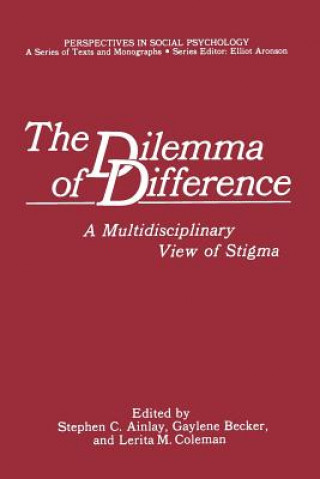
Dilemma of Difference
 Engleski
 125 b
125 b
Do 30 dana za povrat
Kupci su kupili i



 /
/
 Meki uvez
 22.13
€
22.13
€










The topic of stigma came to the attention of modern-day behav ioral science in 1963 through Erving Goffman's book with the engaging title, Stigma: Notes on the Management of Spoiled Identity. Following its publication, scholars in such fields as an thropology, clinical psychology, social psychology, sociology, and history began to study the important role of stigma in human interaction. Beginning in the early 1960s and continuing to the present day, a body of research literature has emerged to extend, elaborate, and qualify Goffman's original ideas. The essays pre sented in this volume are the outgrowth of these developments and represent an attempt to add impetus to theory and research in this area. Much of the stigma research that has been conducted since 1963 has sought to test one or another of Goffman's notions about the effects of stigma on social interactions and the self. Social and clinical psychologists have tried to experimentally create a number of the effects that Goffman asserted stigmas have on ordinary social interactions, and sociologists have looked for eVidence of the same in survey and observational studies of stig matized people in situations of everyday life. By 1980, a consider able body of empirical evidence had been amassed about social stigmas and the devastating effects they can have on social interactions.


Informacije o knjizi
Engleski

Poklonite ovu knjigu još danas
To je jednostavno
1 Dodajte knjigu u košaricu i odaberite isporuku kao poklon 2 Zauzvrat ćemo vam poslati kupon 3 Knjiga dolazi na adresu poklonoprimcaMoglo bi vas zanimati i


 /
Tvrdi uvez
205.62
€
/
Tvrdi uvez
205.62
€





 /
Meki uvez
20.51
€
/
Meki uvez
20.51
€




 /
Meki uvez
51.65
€
/
Meki uvez
51.65
€







Dobar dan! Ja sam Libroamiko, vaš književni savjetnik.
Kako vam mogu pomoći?